
Washing new bedding according to the care label
If you plan to wash new bedding before use, read the care label first. The fibre name alone does not tell you how the finished item should be treated.
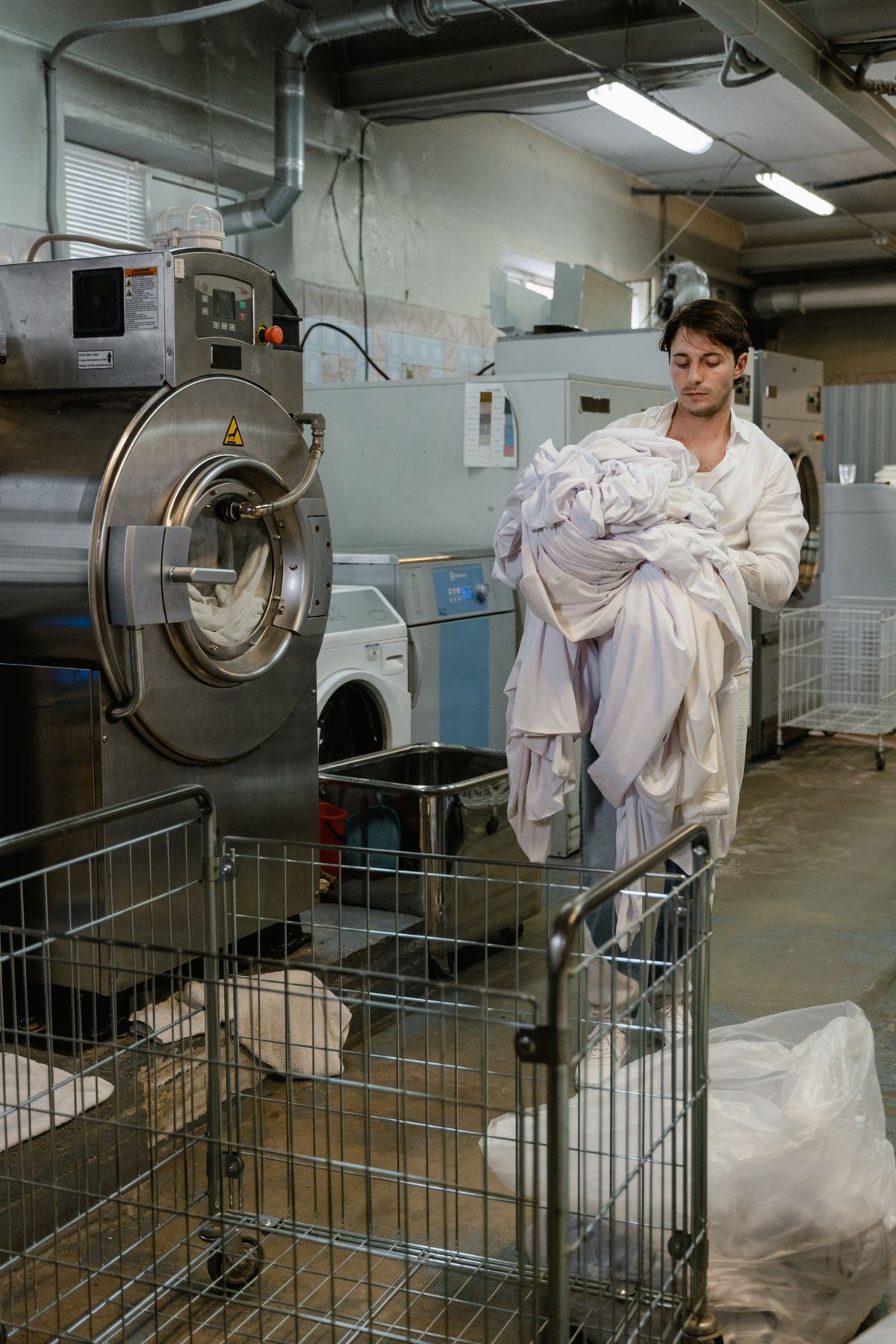
Read the set and prepare the first wash
A duvet cover, decorative cushion and fitted sheet may have different instructions even when sold together. Read temperature, cycle and drying information for each. Embroidery, trims, elastic and coatings can affect care. Do not assume a cotton label permits the hottest programme available.
GINETEX explains that care labelling describes treatment limits intended to avoid irreversible damage. The permitted maximum is not necessarily the setting needed for every ordinary wash. Where particular hygiene needs apply, seek suitable advice and choose bedding whose care instructions can support that routine rather than exceeding its limits.
Remove packaging and check for loose labels or fastenings. Separate colours and follow any first-wash directions from the manufacturer. Close zips or buttons when instructed and avoid overloading the machine. A large duvet cover needs room to move; filling the drum tightly can make washing and rinsing less effective.
Measure detergent according to its label, load size and water conditions. More product is not automatically a better first wash. If avoiding fragrance, consider the detergent and any conditioner or scent additive rather than focusing only on the bedding's marketing. Do not add a disinfectant or stain treatment without checking compatibility and actual need.
Dry before making the bed
Follow the tumble-drying or line-drying directions and make sure the item is fully dry before storage or use. Thick seams and elasticated corners can remain damp after the main fabric feels dry. Do not put damp bedding in a sealed storage bag simply to clear the drying rack.
Check dimensions and seams after the wash. If there is unexpected shrinkage or colour transfer despite following instructions, keep the label, receipt and programme details for a query to the retailer. A photograph before and after can help describe the problem without guessing at its cause.
Keep the care information accessible for future washes. If the label becomes uncomfortable and you choose to remove it, photograph it first and record which item it belongs to. That small record is more useful than trying to reconstruct care from the fibre name months later.