Checking replacement-filter costs before buying an air cleaner
The price of an air cleaner is only the starting cost. Its replacement filters should be identifiable, obtainable and affordable before you commit to the machine.
Find the exact replacement part
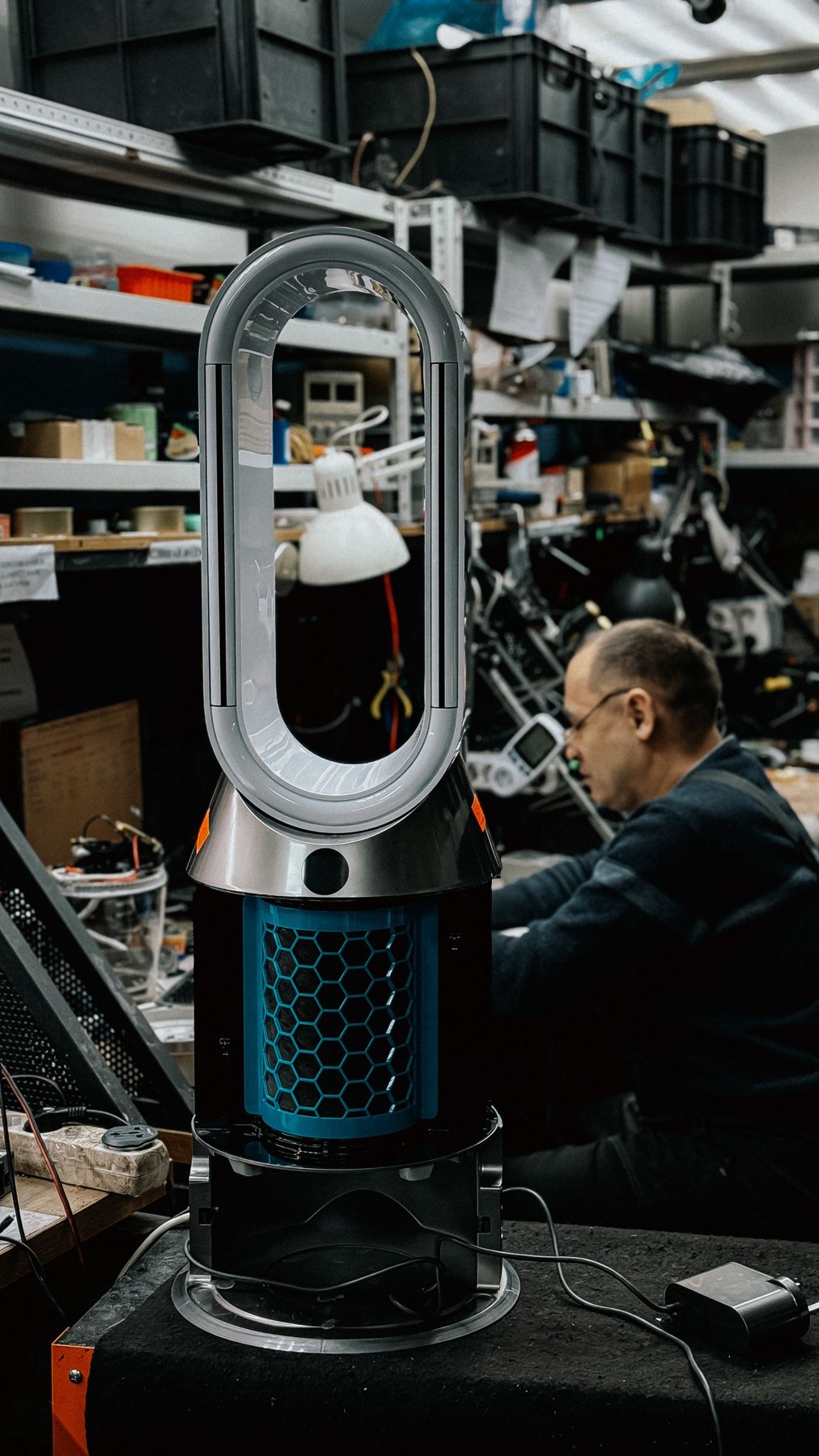
Search the manufacturer's site for the filter code, not just a phrase such as replacement HEPA filter. Check whether the pack includes the particle filter, carbon stage and pre-filter or only one component. A photograph of a complete assembly can obscure what is actually supplied in the box.
Look at availability in your country. A filter listed only by an overseas seller may involve postage, import costs or long delays. Ask the manufacturer how long it expects to support the model, while recognising that a statement of intent is not a guarantee of indefinite stock. Save the compatibility information with the product manual.
Check whether a model suffix identifies a different filter size or regional version. Two machines with nearly identical product names can require different cartridges. Compare the part number on the machine or manual with the replacement listing, and retain a photograph of the label. A retailer's broad compatibility list should agree with the manufacturer's information before you buy several replacements.
Compare realistic annual costs
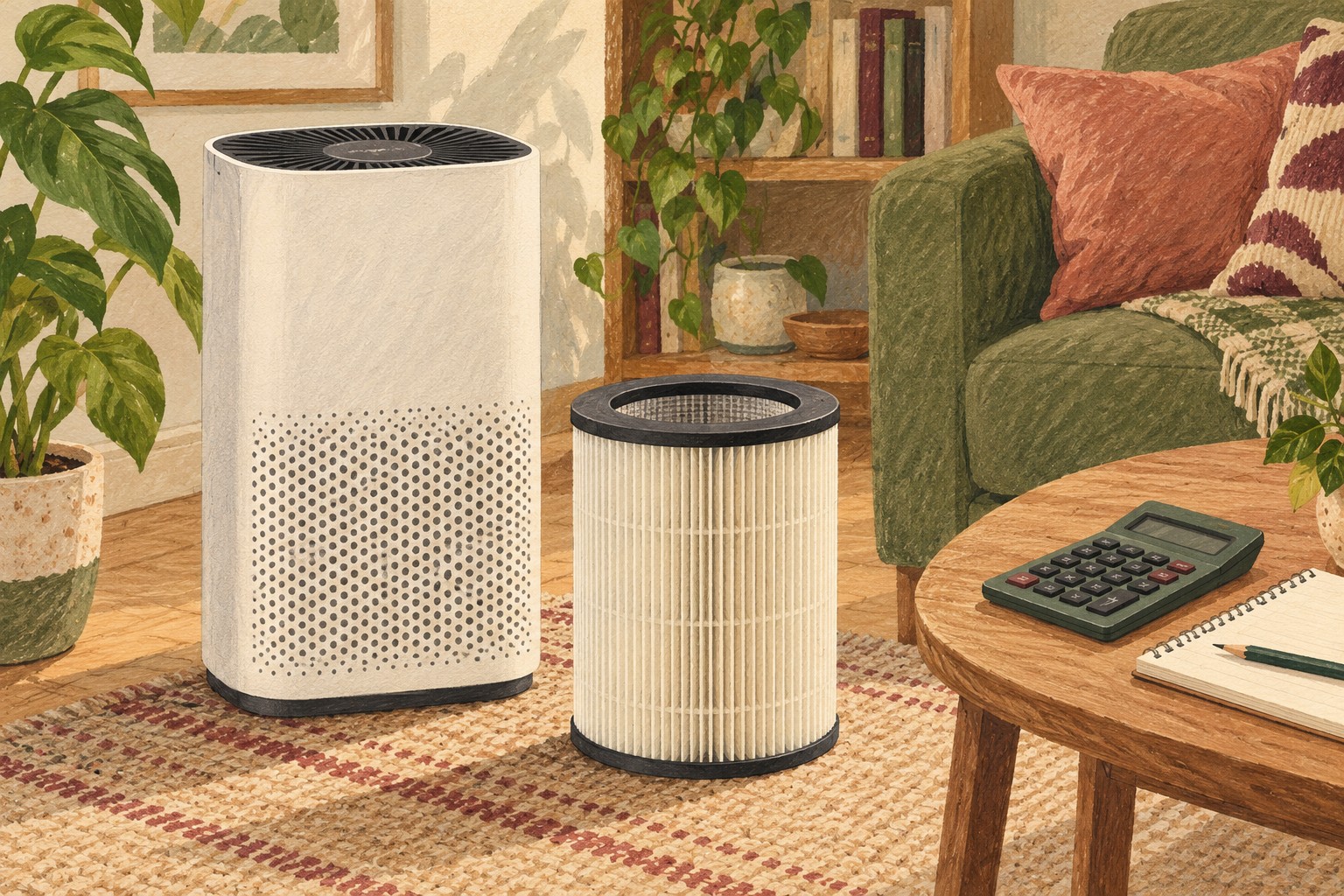
Use the maker's replacement guidance to estimate a range rather than a precise promise. If a hypothetical filter costs £35 and the stated schedule suggests two replacements a year, the filter budget is £70 before delivery. If the schedule varies with conditions, calculate a second scenario with more frequent changes. Keep this separate from electricity costs.
Check whether a washable pre-filter reduces routine debris loading but leaves the main filter as a replacement item. Do not assume every component can be washed. A filter indicator may count operating time rather than measure the remaining capacity of each material. Read what the indicator actually means before using it to estimate costs.
Consider handling too. A large assembly may be awkward to remove, and a dusty filter needs to be dealt with according to instructions. If replacement requires moving heavy furniture or dismantling the housing with unfamiliar tools, the machine may be less convenient than its purchase price suggests.
A more complete hypothetical comparison might pair a £90 cleaner needing £70 of filters each year with a £140 cleaner needing £35 each year. Ignoring electricity and other differences, their first-year totals would be £160 and £175, while the second unit could cost less over a longer period. This arithmetic does not establish equal filtration performance. First make sure both devices meet the same room and pollutant requirements, then compare the cost over a period you realistically expect to own them.
Evaluate compatible alternatives carefully
A third-party filter that fits is not automatically equivalent in filtration, airflow or sealing. Ask what specifications support compatibility and whether using it affects product claims or warranty terms. Avoid treating a similar colour and shape as sufficient evidence.
If you cannot obtain the specified filter, contact the maker before continuing indefinitely with an overdue one. Do not stack extra filter layers into the housing or cut a larger filter to fit unless the machine's instructions support that arrangement. The air cleaner is a system; changing resistance or fit can alter its operation. Buying a model with a clear maintenance route can be more useful than chasing the lowest starter price.
Ask what happens if one filter stage is unavailable. Some machines use a combined cartridge, while others have separately replaceable stages. Removing an unavailable stage or substituting a generic sheet may change the system's claimed function. If the manufacturer has discontinued a part, request a supported alternative in writing. An inexpensive machine without a dependable maintenance route may be a poor fit for regular use even if its original specifications looked suitable.