Storing cleaners away from food and toiletries
Secure storage should make it difficult to confuse a cleaner with food or personal care, while keeping the label and closure intact.
Choose the space before organising bottles
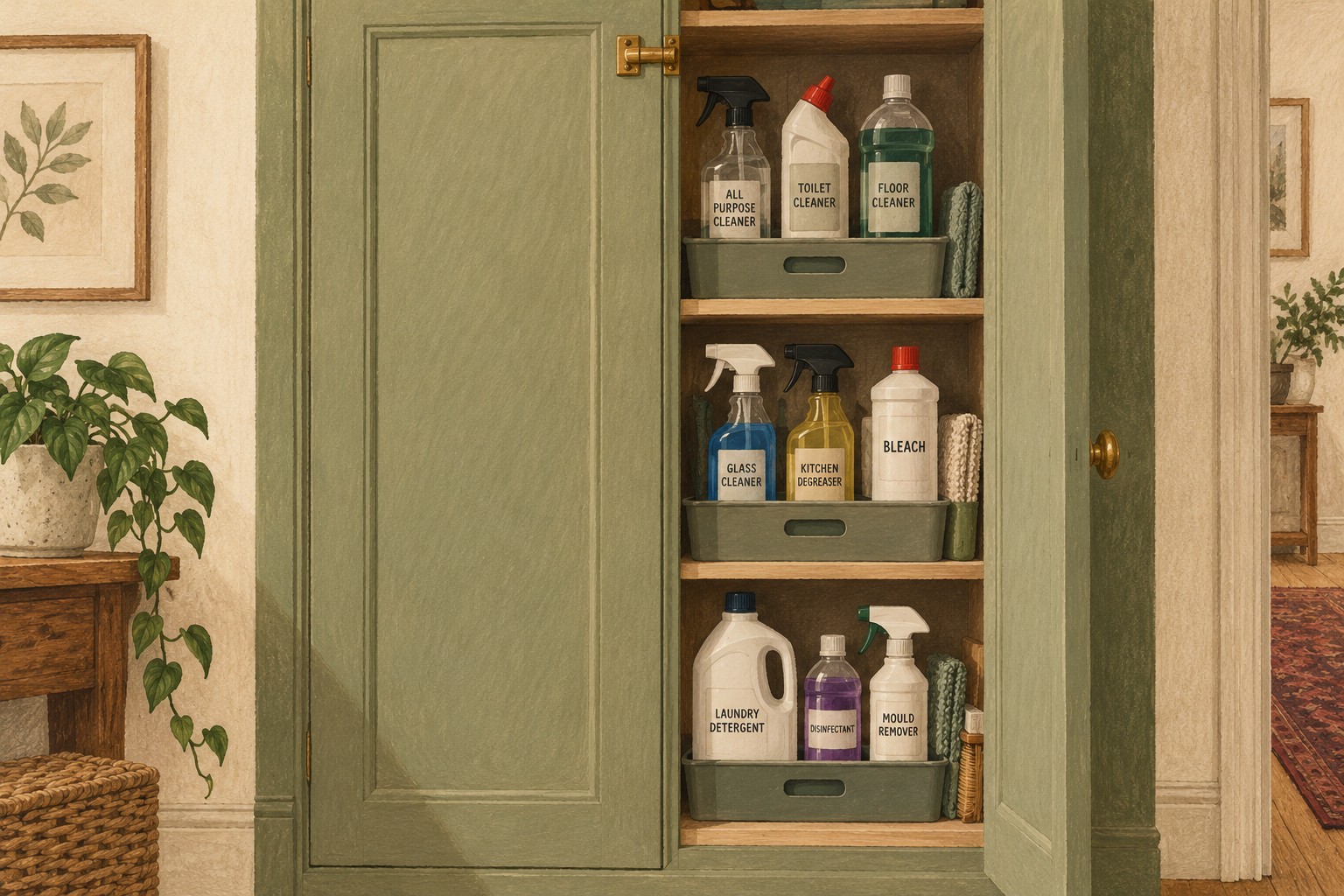
Use a storage location that meets the product’s temperature, ventilation and access requirements. Keep cleaners away from food, medicines and toiletries. A bathroom cupboard containing both mouthwash and an unlabelled cleaner is a poor place to rely on memory.
Consider children, pets and visitors. An ordinary cupboard door or a high shelf may not provide the security you need. Use appropriate locks or other controls, and do not treat a child-resistant cap as the only barrier.
Keep containers and labels together
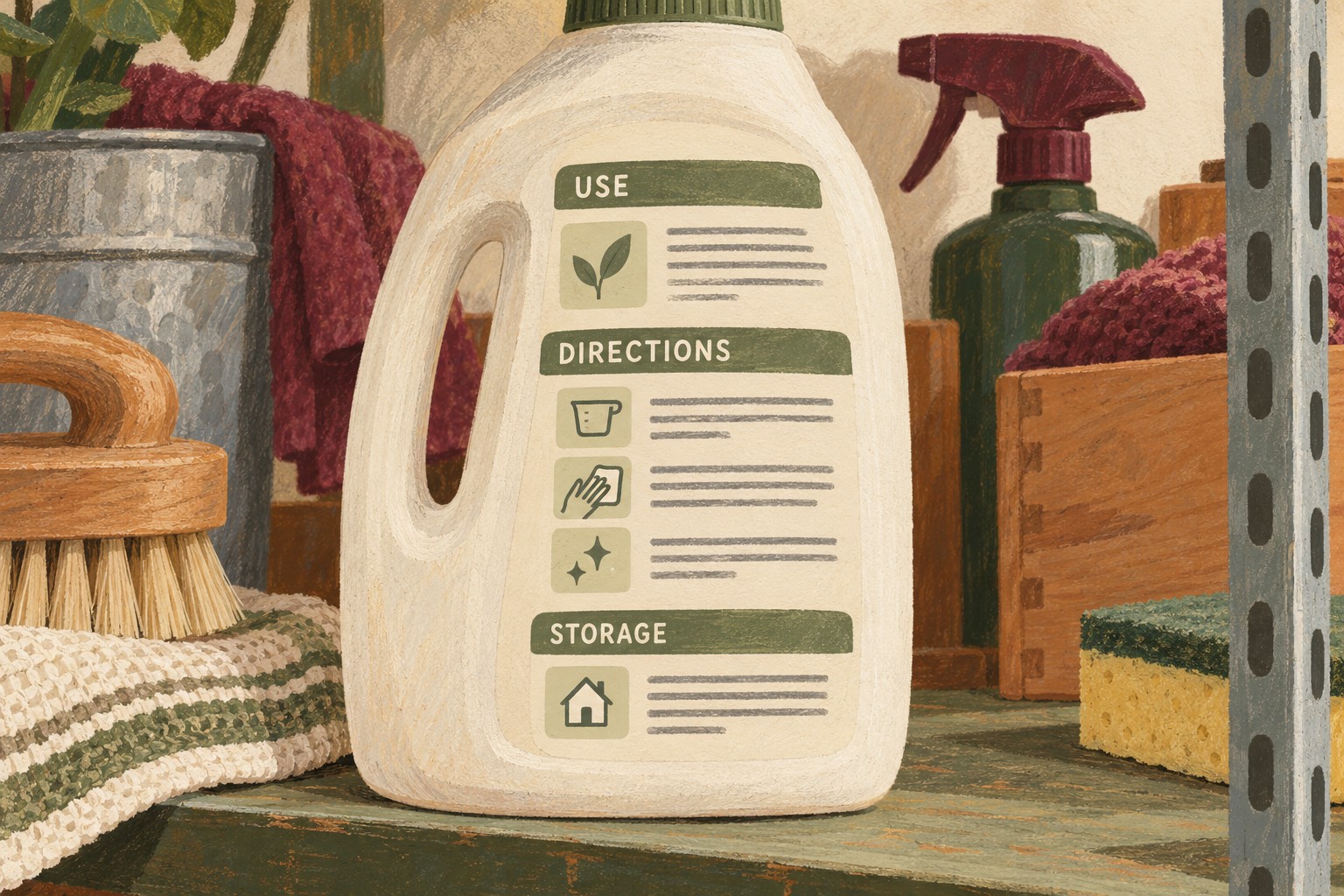
Store products in their original containers with readable labels. Do not transfer them into drinks bottles, food jars or matching cosmetic dispensers. The shape and label are part of how people recognise the contents and find first-aid information.
Close caps and triggers as intended and keep bottles upright where required. Check for damaged packaging, leaks or corroded closures. Follow manufacturer and local waste advice for a problem container rather than pouring its contents into an unsuitable replacement.
Make spills less likely to spread
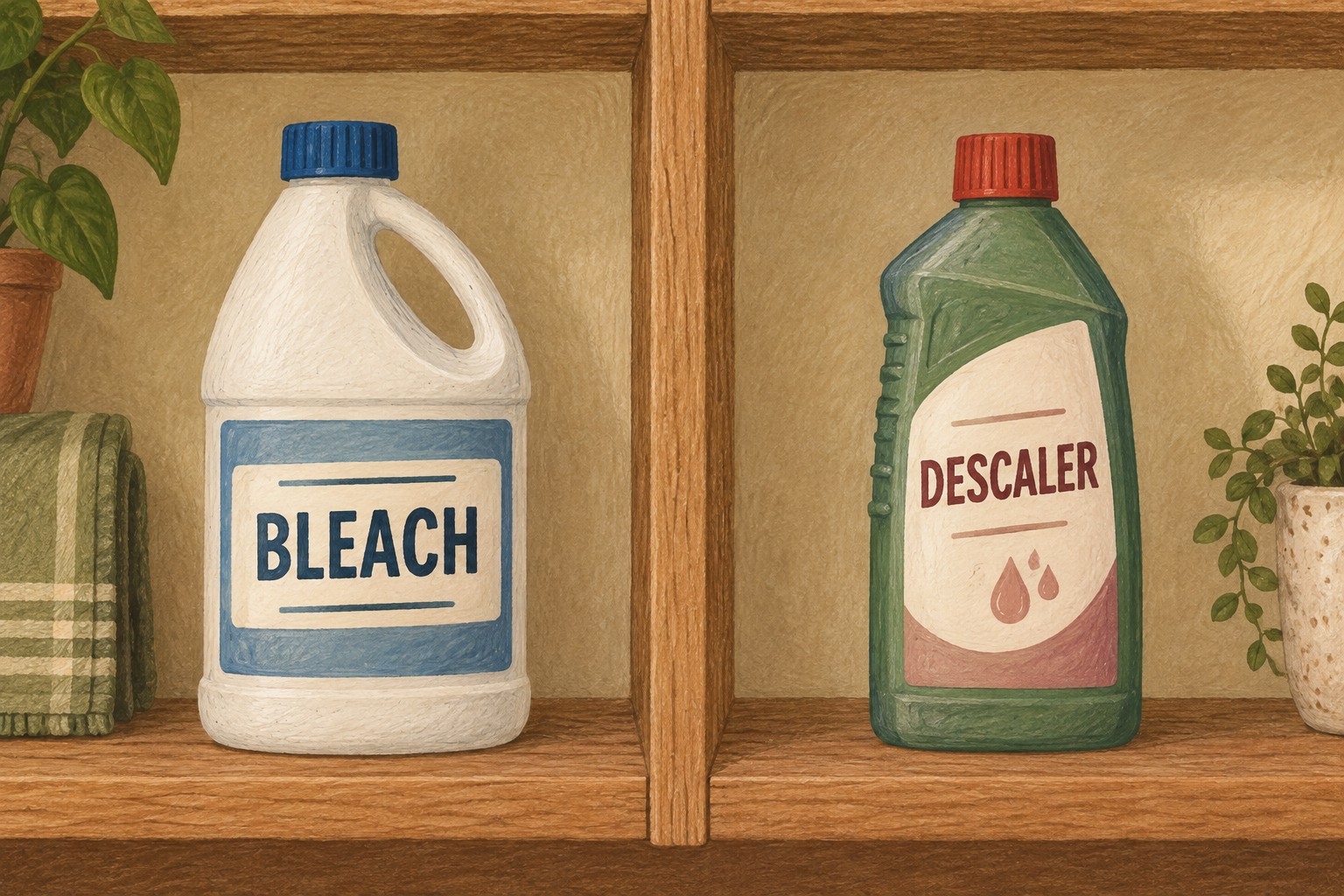
Arrange bottles so you do not have to pull one from behind an unstable stack. A suitable tray can help contain a small leak, but it does not make incompatible products safe to mix. Follow storage-separation instructions on the labels.
Keep cleaning tools in a way that does not obscure product warnings or tip bottles. Avoid storing measuring utensils where they could return to food preparation. A dedicated measuring item should remain identifiable as part of the cleaning routine.
Review the cupboard periodically
Remove products that are no longer needed through the appropriate local disposal route. Do not combine small remainders to free shelf space. Keep only an amount that fits securely and can be used within the product’s intended life.
In a shared home, explain where products belong after use. Secure storage fails if a bottle is routinely left beside the sink or on the floor. Include temporary use in the plan: have a safe place to put the product while you fetch a cloth or answer an interruption.