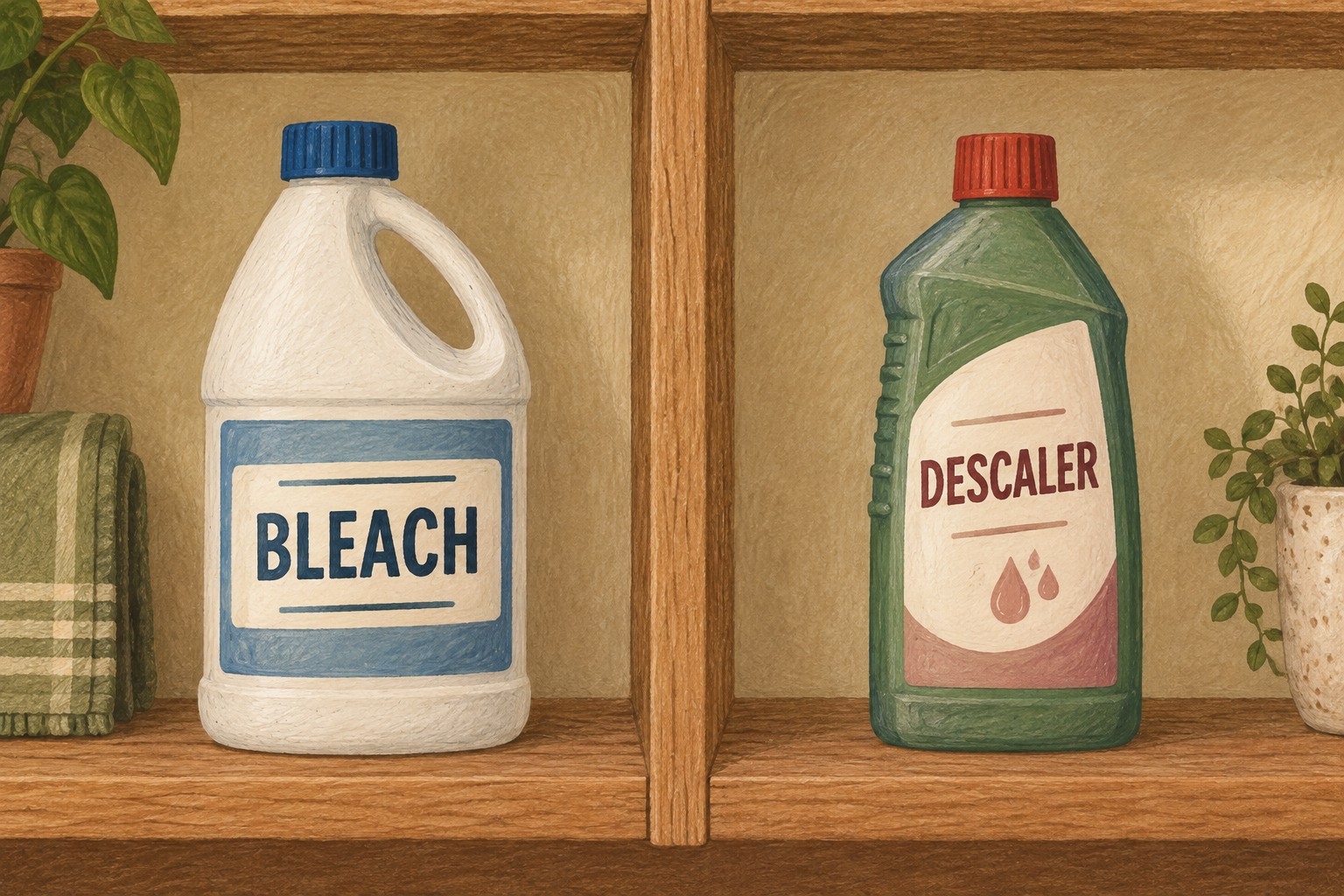
Cleaning and disinfecting are different jobs
Cleaning removes dirt and material from a surface. Disinfecting is a separate process intended to kill specified germs under defined conditions.
Decide which job is needed
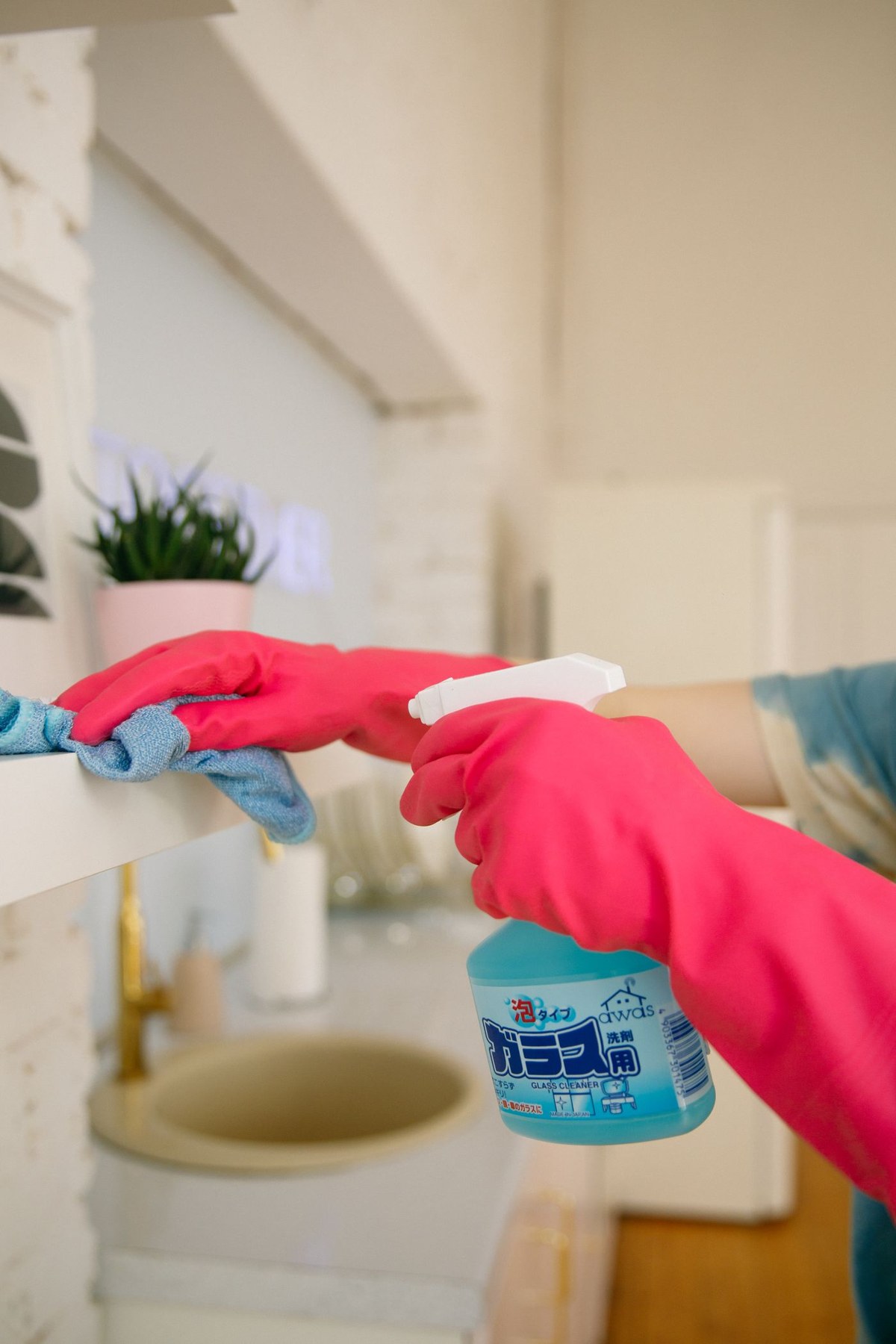
For many ordinary household situations, regular cleaning is the relevant task. CDC guidance distinguishes that from situations where disinfection is also appropriate, such as when someone is ill or particularly vulnerable to infection. The right routine depends on the situation, not on whether the strongest-sounding product is available.
Start by naming the surface and the problem. A dusty shelf, a food-preparation surface after a particular task and a bathroom used by someone who is unwell do not necessarily call for the same method. A product’s scent is not evidence that it performs either cleaning or disinfection effectively.
Read a disinfectant as a set of conditions
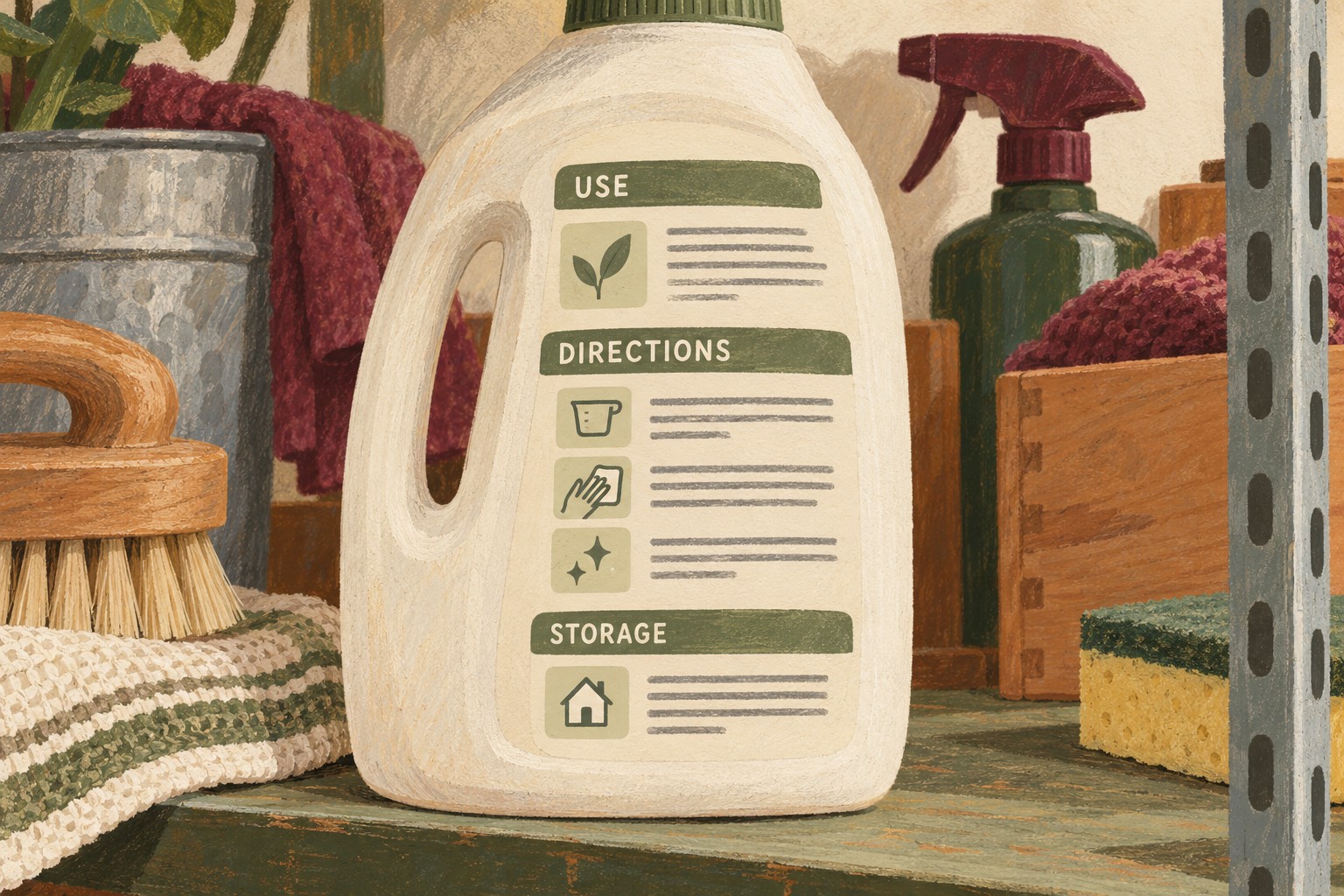
A disinfectant label may specify the surfaces, organisms, dilution, application method and contact time. Contact time is the period the surface must remain wet under the product’s directions. Spraying and immediately wiping dry may not meet that condition.
Some products require cleaning first; others have combined claims with particular instructions. Read the method for the claim you need rather than assuming that one short wipe performs every job. A product suitable for a hard non-porous surface may not be appropriate for wood, fabric or a food-contact area.
Check whether rinsing is required afterwards, especially where food, children or pets may contact the surface. Do not infer that a product is leave-on because it is described as natural, gentle or suitable for the home.
Do not make a stronger mixture
Use only the stated dilution, if dilution is required. Never mix household cleaning products or disinfectants together. Adding another cleaner can create hazards and also makes the original directions unreliable. Water is added only where the product instructs it, using the amount and method specified.
Prepare the ventilation and protective equipment required before opening the product. Keep other people, children and pets away as directed while the surface is being treated and drying. Store the bottle securely with its original label afterwards.
If you cannot meet the conditions in the directions, choose another suitable product or seek guidance. Shortening the contact time because you are in a hurry is not equivalent to completing the process.
A surface can need several checks at once
Consider a kitchen worktop after a task that warrants disinfection. You need a product whose claim covers the relevant use, whose directions can be followed and whose formula is compatible with the worktop material. Meeting only the first requirement is insufficient. A strong disinfecting claim does not protect a surface from chemical damage.
The finishing step matters as much as application. If the label requires rinsing before food contact, that rinse belongs in the planned time and equipment. If the surface must remain wet for a period, arrange the task so nobody dries it or starts preparing food midway through.
For a different example, a dusty bookcase may simply need compatible cleaning. Buying a disinfectant because it sounds more thorough can add handling requirements without addressing a need you have identified. Match the process to the situation rather than assigning every household task the same treatment.
Build an ordinary routine around cleaning
A simple routine can identify which surfaces need regular cleaning and which circumstances trigger additional disinfection. This helps prevent both indiscriminate use and forgetting an important step when circumstances change. Keep instructions accessible rather than relying on the person who bought the bottle to remember them.
For households managing a specific illness or a person with special medical needs, use the advice from the relevant healthcare or public-health service. General shopping guidance cannot determine an infection-control plan. When the special situation ends, review which products still serve a regular purpose instead of keeping every temporary purchase open indefinitely.