Why household cleaning products should not be mixed
Combining cleaners can create a new and hazardous mixture. Familiar household packaging does not make the chemistry predictable.
One product does not complete another
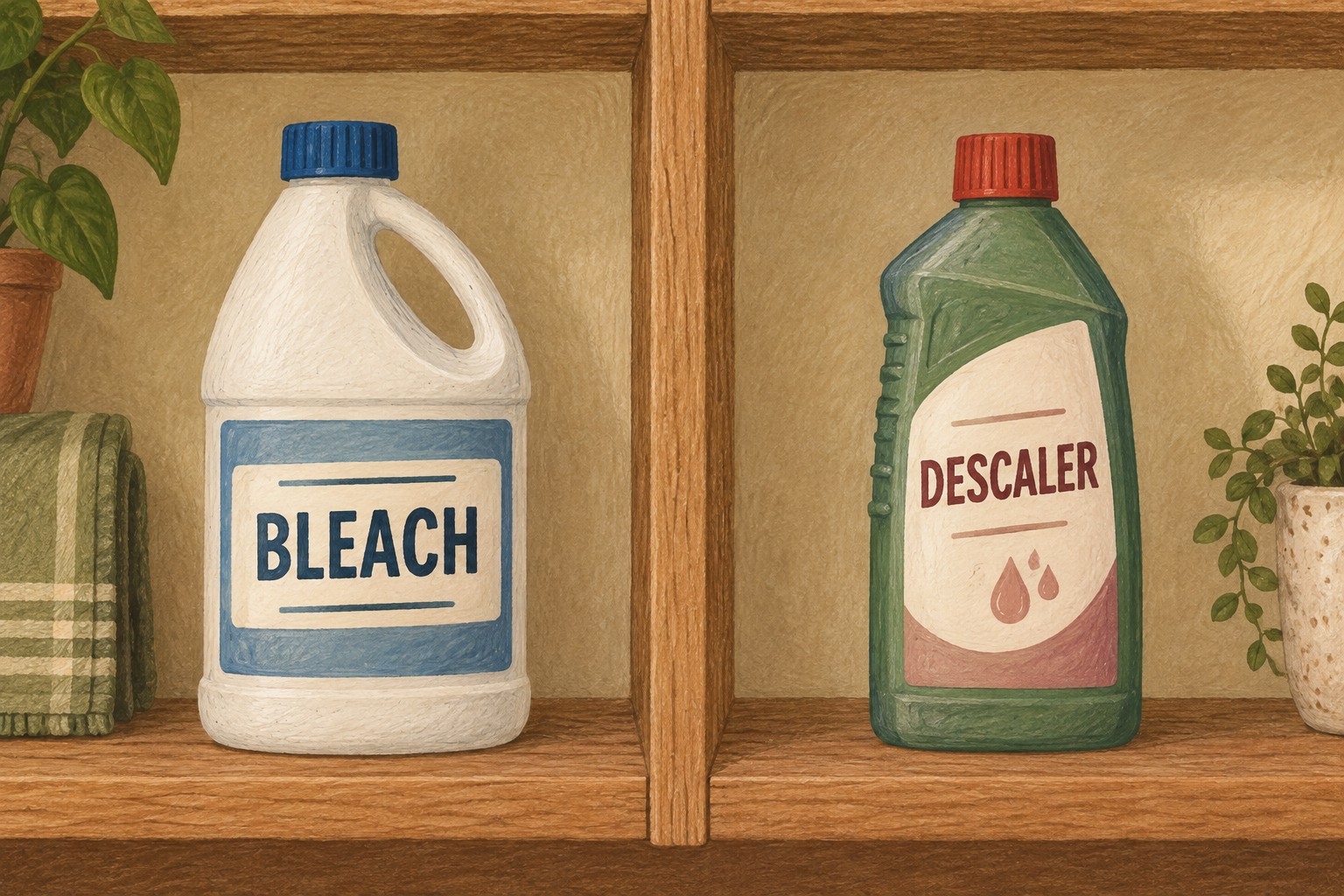
A cleaner is formulated and labelled for particular conditions. Adding another cleaner changes those conditions. Bleach must not be mixed with other household cleaners or disinfectants; combinations involving acids or ammonia can release dangerous gases. The broader household rule is to avoid mixing products, rather than trying to memorise a few supposedly safe combinations.
This includes products marketed as natural. Vinegar is not a universal neutraliser, and an essential-oil cleaner is still a mixture. A recipe online does not establish compatibility with the products on your shelf, whose ingredients and concentrations may differ.
Mixtures can happen without a measuring jug
Pouring a new toilet cleaner over residue from an earlier one, spraying a second product onto a still-wet surface or emptying several bottles into one waste container are all ways products can meet. Think about what is already present before applying something else.
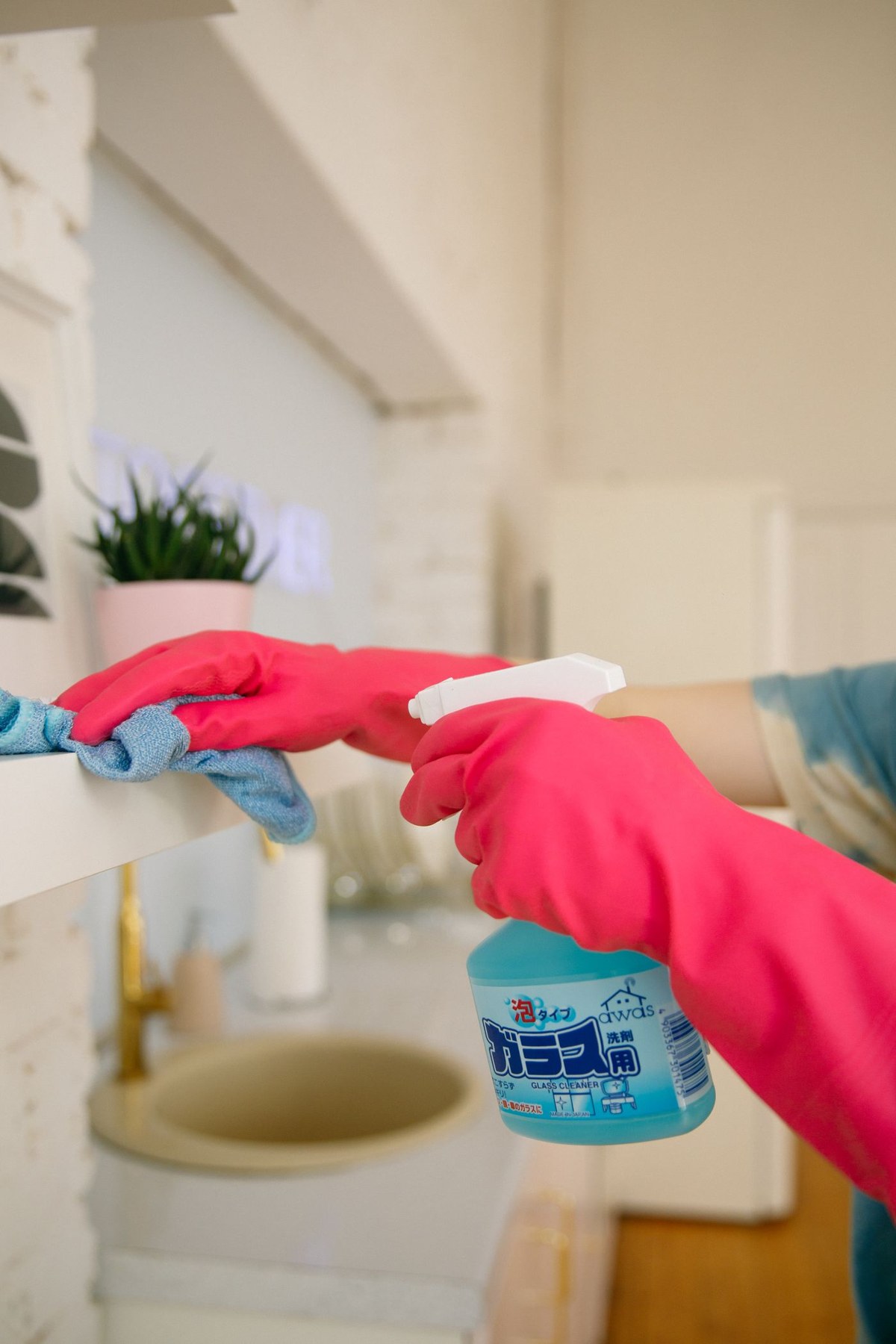
Keep tools identifiable too. A bucket used for one product may retain residue, and a cloth can carry cleaner to another surface. Follow the cleaning and rinsing instructions for tools before changing tasks. Do not use a shared unlabelled spray bottle for whichever cleaner is available that day.
Where a product is meant to be diluted, add only what its label specifies, generally the stated amount of water. Do not add another cleaner to improve smell, foam or strength. More foam does not demonstrate better cleaning.
If you have accidentally mixed products
Stop the task and move away from fumes. Do not lean over the container to identify the smell and do not attempt to neutralise the mixture with another household ingredient. Keep other people and pets away and seek advice from the appropriate poison-information or emergency service for your location.
If someone has breathing difficulty, significant eye symptoms or other serious effects, seek urgent help. Provide the product names or labels if it is safe to do so. Do not delay care while searching for an exact ingredient list online.
For prevention, keep a small set of clearly labelled products and agree on the routine in a shared home. If one person starts cleaning and another finishes, communicate which product was used. That simple handover can matter more than buying a new cleaning accessory.