Keeping the label when decanting a permitted cleaning product
Decanting a cleaner is appropriate only when the product’s instructions permit it. Identification and a compatible container remain essential.
Check whether transfer is actually intended
Some concentrates are designed to be diluted into a specified spray bottle or bucket. Others are supplied ready to use in packaging that should be retained. A removable cap does not establish permission to move the contents into another container.
Read the product’s method and ask the supplier if the intended secondary container is unclear. Consider chemical compatibility, closure, dispensing and the label space. A bottle chosen for its colour or shape may fail several of those requirements.
Preserve more than the product name
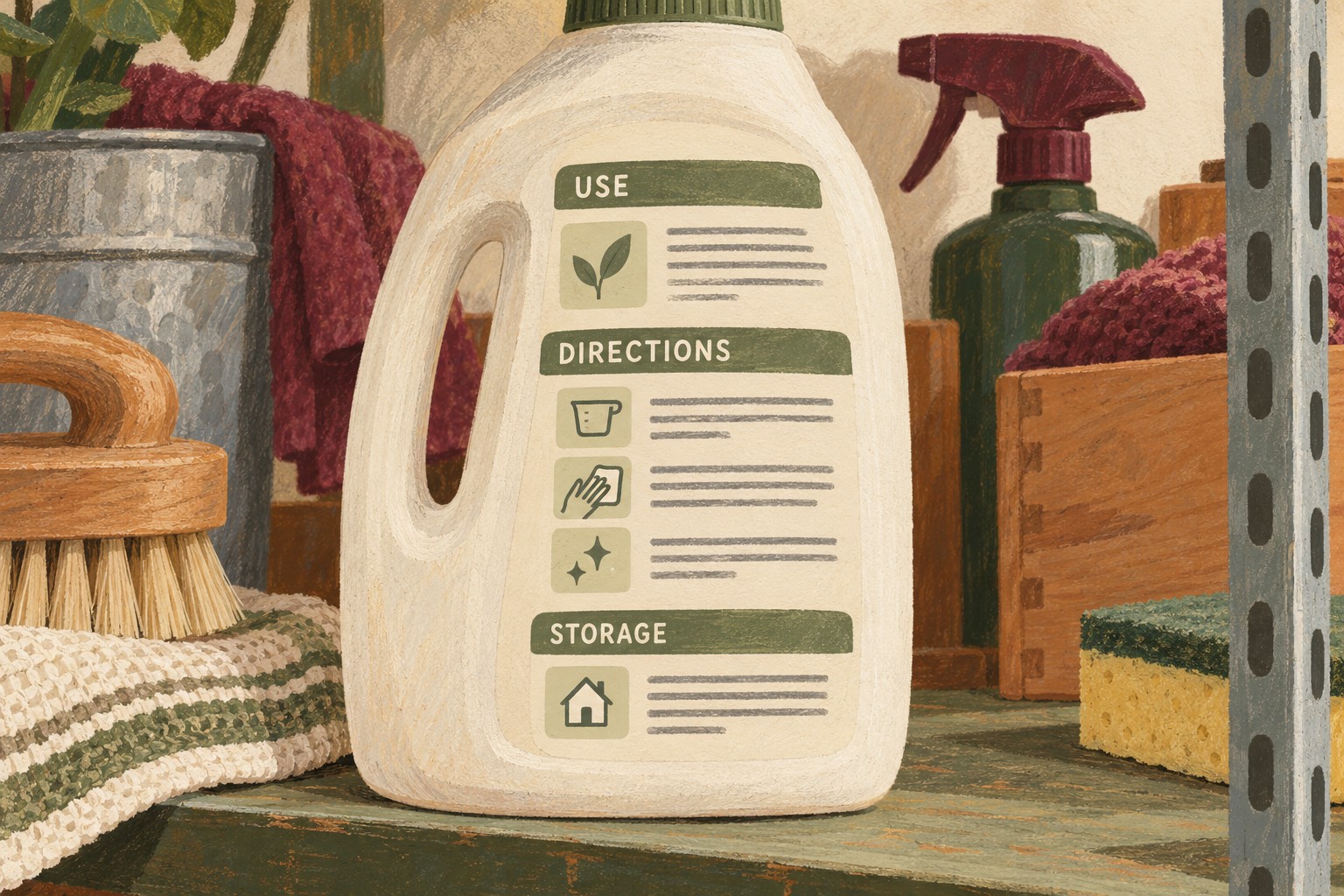
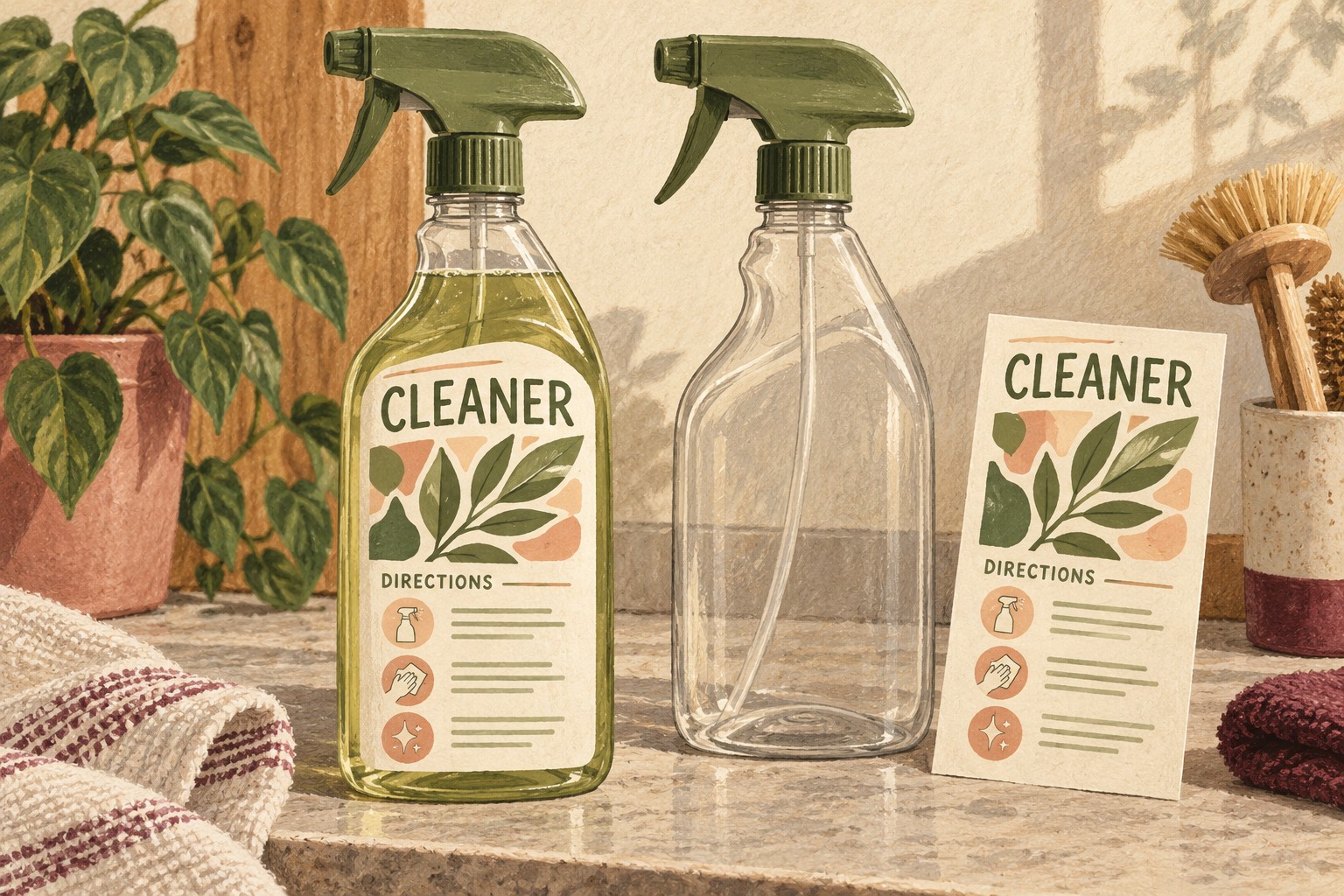
A secondary label may need the identity, dilution, preparation date and hazard or precautionary information appropriate to the product. Follow the manufacturer’s supplied labelling system where available. A handwritten word such as cleaner is inadequate when several different mixtures could fit it.
Keep the original label and directions accessible. A secondary bottle cannot always carry every detail, but the user still needs the full instructions and emergency information. Do not cover essential warnings with an organisational sticker.
Do not create a drink-like container
Never use food or drink packaging for household chemicals. Even a clear label may not prevent someone from acting on the familiar shape, especially a child or a distracted adult. Keep the permitted container separate from food and toiletries.
Use only the stated dilution and do not mix products. Emptying several similar-looking leftovers into one bottle destroys identification and can create a hazardous mixture. An old bottle also needs the manufacturer’s specified preparation before it is reused, if reuse is allowed at all.
An example of a misleading reuse
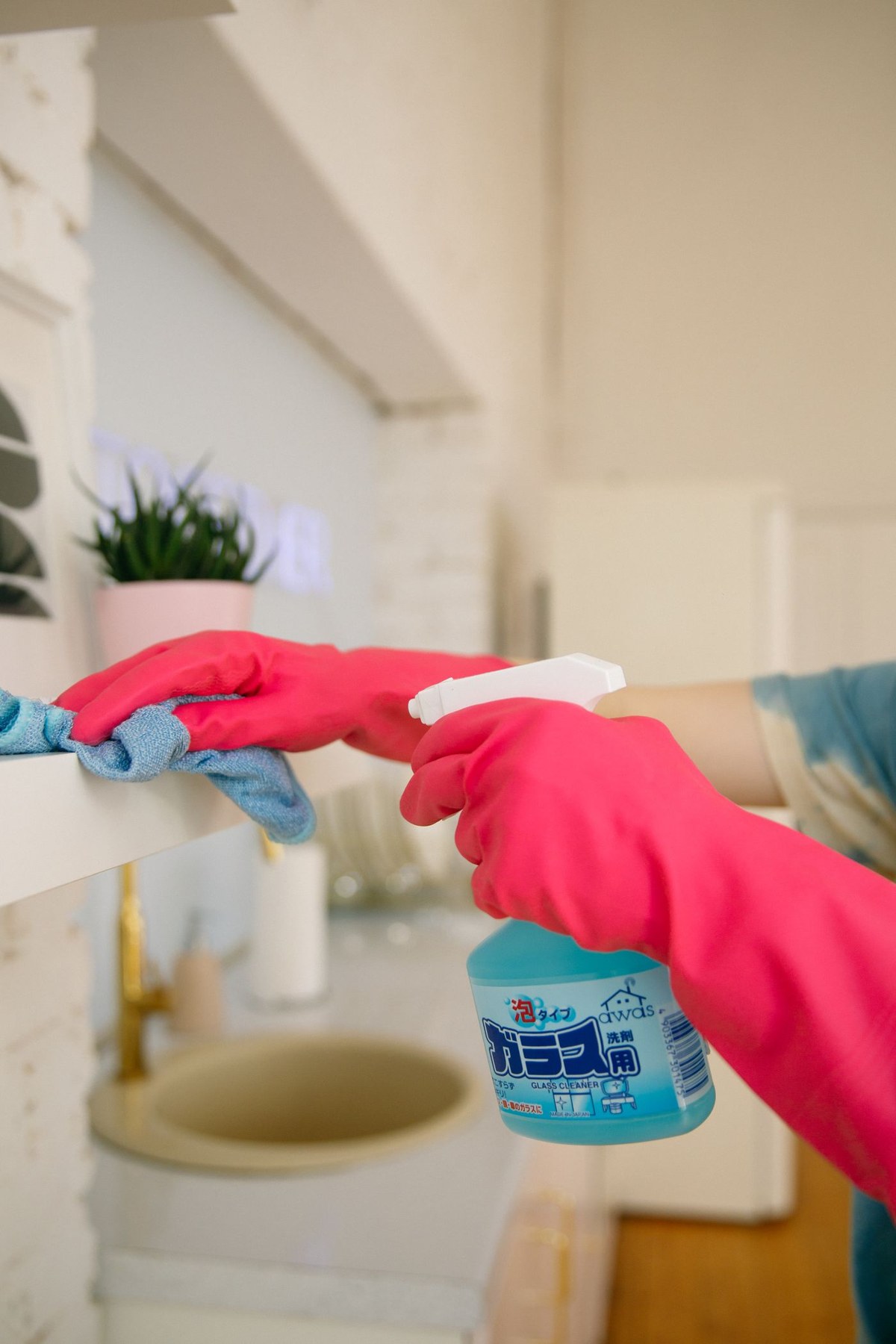
Suppose an empty glass-cleaner bottle is filled with a different disinfectant. The trigger may seem convenient, but the remaining label could now give the wrong application method, precautions and contact time. A person reading it carefully would still receive incorrect information.
Replacing the front sticker with the word disinfectant does not necessarily resolve the problem. The bottle and trigger may be unsuitable for the new product, and the full warnings may still be missing. The appropriate route is a manufacturer-permitted container and labelling system, not a cosmetic relabelling exercise.
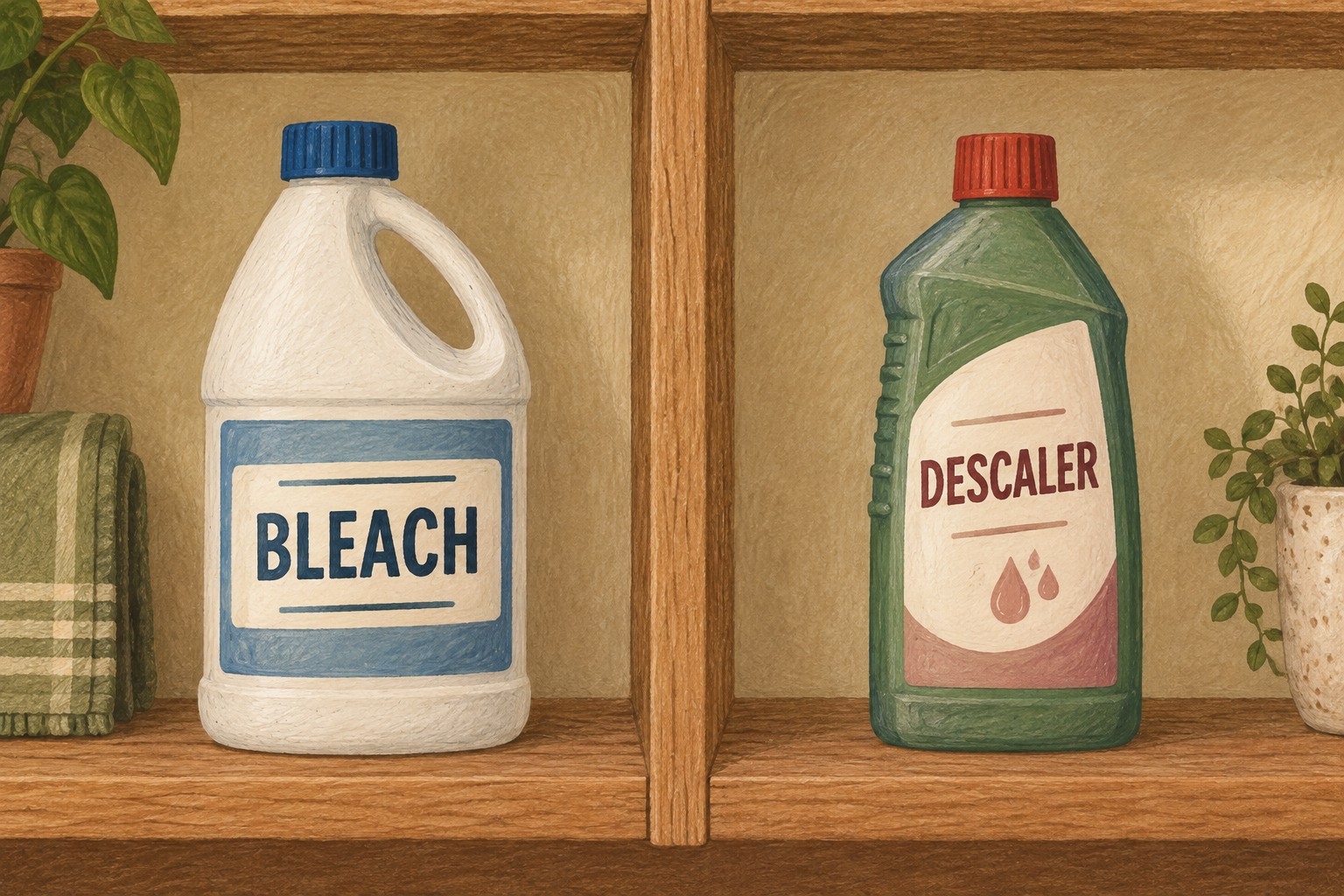
This is why matching bottles across a kitchen shelf can work against clarity. Keeping recognisable original packaging is often the simplest way to ensure that the method belongs to the contents.
Make the handover explicit
If someone else will use the prepared product, show them the label and the current instructions. Do not leave a newly filled bottle where an old one usually stood and assume they will notice the change. When the correct secondary labelling cannot be maintained, keeping the original ready-to-use pack is a simpler option.
Keep the prepared product current
Observe the stated storage period for a diluted solution and mark when it was made. Do not top up an unknown remainder and reset the date. Replace a container whose label is unreadable or whose closure is failing, using a method approved for the product.
For workplace use, additional chemical-labelling and risk-assessment duties may apply; a household note is not a complete workplace procedure. HSE’s safety-data-sheet guidance explains why chemical information supports a task-specific assessment rather than replacing it. If the system feels too complex for an occasional home task, a suitable ready-to-use product may be more manageable.