Flat-pack furniture: checking the panel and finish information
Flat-pack describes how furniture is delivered, not what its panels or finishes contain. Read the construction information alongside the assembly requirements.
Separate the core from the surface
A listing may describe an oak finish while the panel beneath it is a different material. Look for the core, veneer or laminate, edge treatment and back panel information. Drawer bases and shelves may use different materials from the main frame. Ask for clarification if a decorative name is being used as though it were a construction description.
An FSC label concerns forest-based sourcing, while an emissions claim concerns a different property. Check what each statement applies to. A certified packaging box does not establish the furniture's wood sourcing, and a panel test does not automatically cover every adhesive or finish in the assembled item.
Compare an oak-effect laminate, an oak veneer over a panel and solid oak as three different descriptions. Each may suit a particular job, but the name alone does not establish water resistance, emissions or repairability. Ask how exposed edges should be protected and whether the finish can tolerate the cleaning method you use. A close-up of the decorative surface is not enough to identify the underlying construction.
Read the assembly before purchasing
Download the instructions and check the number of people, tools and fixing requirements. If wall attachment is specified, include suitable installation in the plan. Do not omit an anti-tip fixing because the item feels stable when empty. The wall type and appropriate fixing may require advice from a competent person.
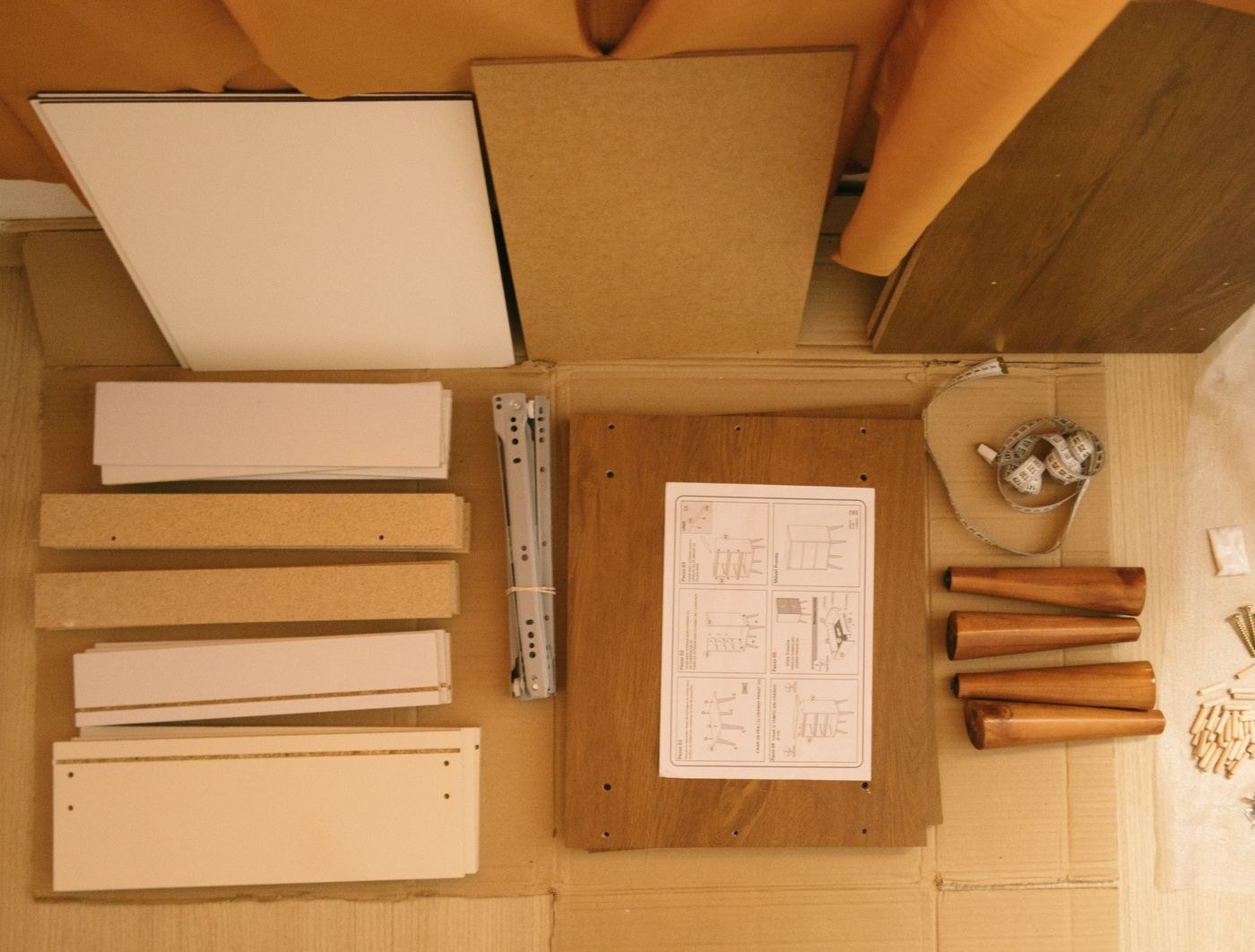
Measure the space needed to assemble the item as well as its final footprint. A large cabinet may need to be built lying down before it is raised. Consider whether it can be assembled without blocking the room's ventilation or damaging panels on the floor. Keep pieces organised so the printed part references remain readable.
Check the maximum shelf loads and intended room conditions. A unit meant for a dry living room may not suit a damp utility area. Material information becomes useful when connected to the use, rather than serving only as a list of technical terms.
If the furniture will hold heavy equipment, books or kitchen items, compare the stated load per shelf and the way the load must be distributed. Do not divide the total cabinet capacity evenly unless the instructions say to do so. Shelf supports, back panels and wall fixings can have different structural roles. Missing a small fitting may therefore matter even when the assembled cabinet looks complete.
Keep the evidence for later
Save the exact product page, finish code and manual. Retailers sometimes sell visually similar versions with different dimensions or construction. If a panel arrives damaged, photograph it before assembly and ask for the specified replacement rather than repairing a structural section with an improvised adhesive.
Follow airing and cleaning directions after assembly. Do not use a strong solvent to remove a mark unless the finish instructions permit it. If you have a question about emissions, ask which test or standard supports the claim and whether it covers the version supplied. A clear answer is more valuable than a broad reassurance that all modern furniture is safe or that all manufactured board is unsafe.
Before tightening every fitting, check for damaged edges, misdrilled holes and mismatched parts using the assembly guide. Report defects rather than enlarging holes or adding screws in unapproved positions. An improvised repair can affect both structural performance and the ability to obtain a replacement. Keep unused correct fittings and the manual together, labelled with the furniture model, so a later move or adjustment does not rely on guessing how it was originally assembled.