Dishwashing liquid: measuring rather than guessing
Dishwashing liquid works as part of a washing process. Measuring the intended amount helps compare products without equating foam with cleaning.
Read the particular method
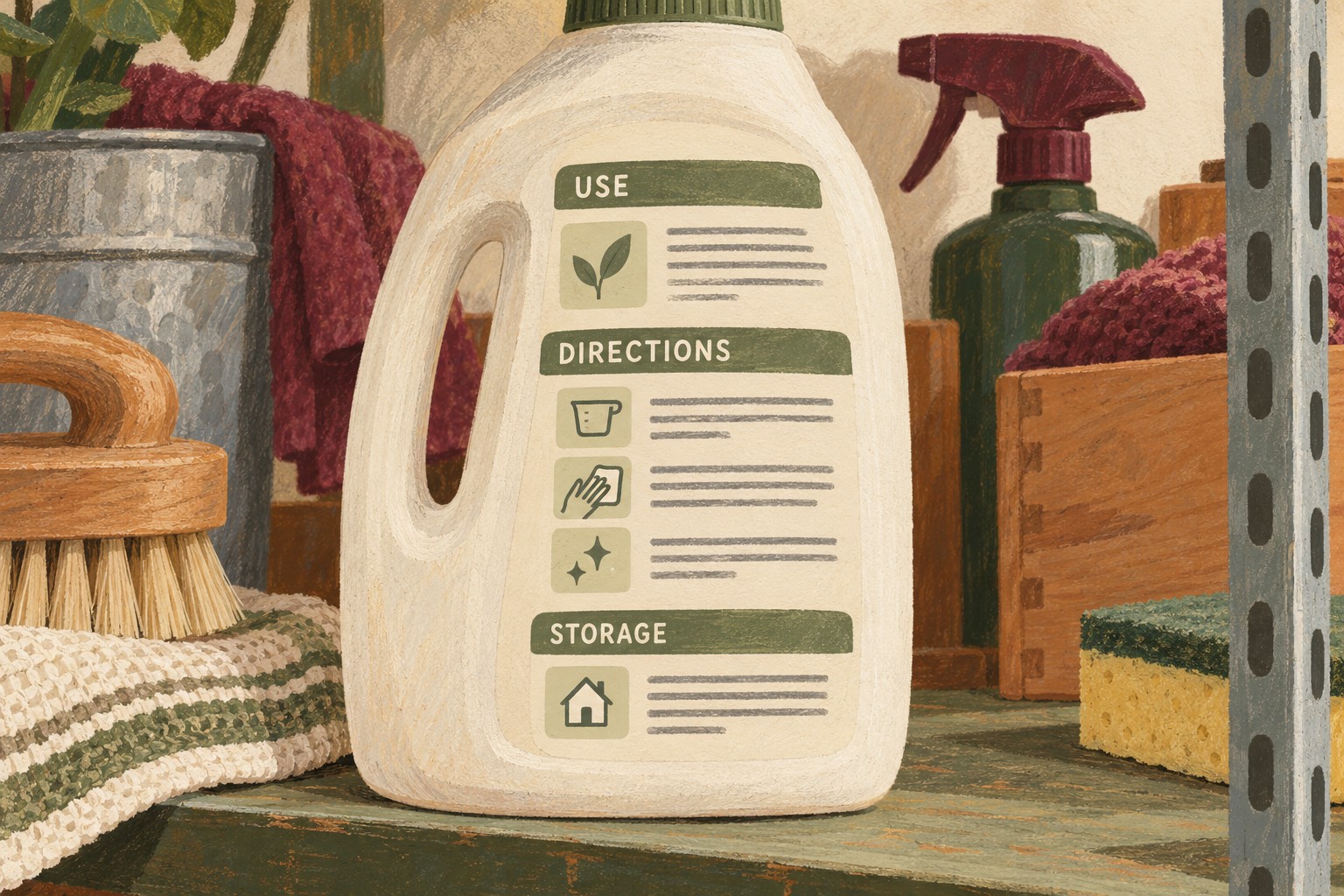
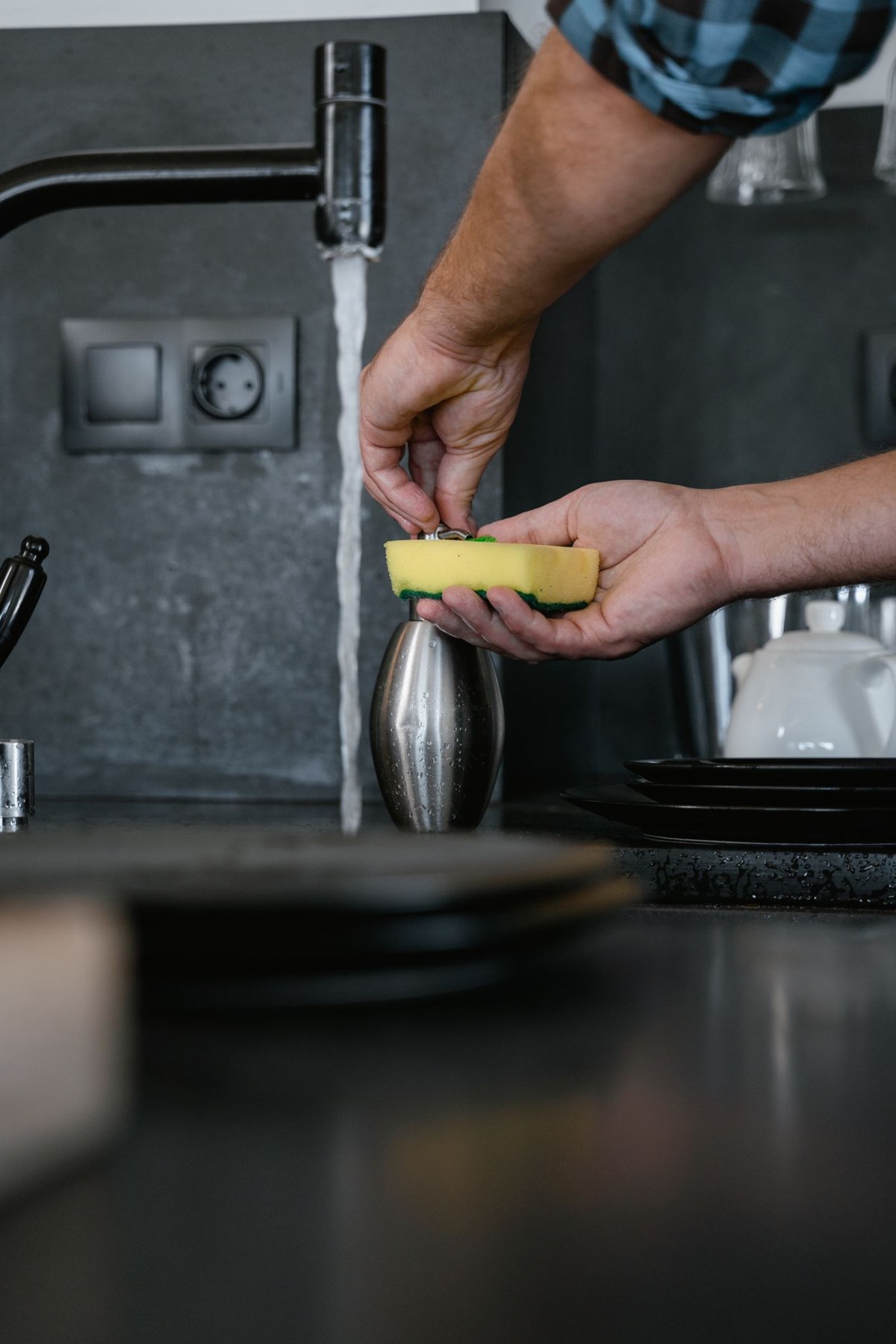
Some products give a dose for a bowl of water; others describe application to a sponge or directly to a suitable item. Follow the label for the task. Do not transfer the dose from an old bottle when switching to a more concentrated formula.
Hand dishwashing liquid is not the same as automatic dishwasher detergent. Do not put it into a machine unless that appliance and product explicitly specify such use. The fact that both clean dishes does not make their foaming behaviour interchangeable.
Make the wash easier before adding more
Remove leftover food appropriately and organise the items so that the water and tools remain useful. A crowded bowl with greasy residue may need fresh water rather than another large squeeze of detergent. Follow the care instructions for delicate items and materials that should not be soaked.
Use the stated amount and rinse as directed. A persistent scent or a slippery coating is not a desirable target. Equally, a low level of visible foam does not by itself prove that the wash needs more liquid. Judge the actual result and the condition of the washing water.
Compare cost by ordinary portions
For a simple personal comparison, note how long each bottle lasts under a similar routine. If one dispenser pours rapidly, it may encourage larger portions. A smaller opening or measured pump can improve control, provided it is an intended system for the product.
Do not refill an unrelated hand-soap dispenser without clear compatibility and labelling. Keep the product recognisable in a shared kitchen. A generic bottle next to the sink can be confused with hand wash, especially by visitors.
Look after the tools as well
Rinse, clean and dry brushes or cloths according to their instructions, and replace damaged items that no longer work well. A detergent choice cannot compensate for a neglected tool or an unsuitable abrasive pad.
If repeated wet work causes persistent skin discomfort, review protective measures and seek advice. A stronger or more fragranced detergent is not a solution. Choose a format and bottle size that make controlled use and secure storage easy for the people doing the washing.