Cleaning kitchen worktops by surface material
A worktop may need routine cleaning, stain treatment or disinfection. Identify both the surface and the job before choosing a bottle.
Identify the complete surface
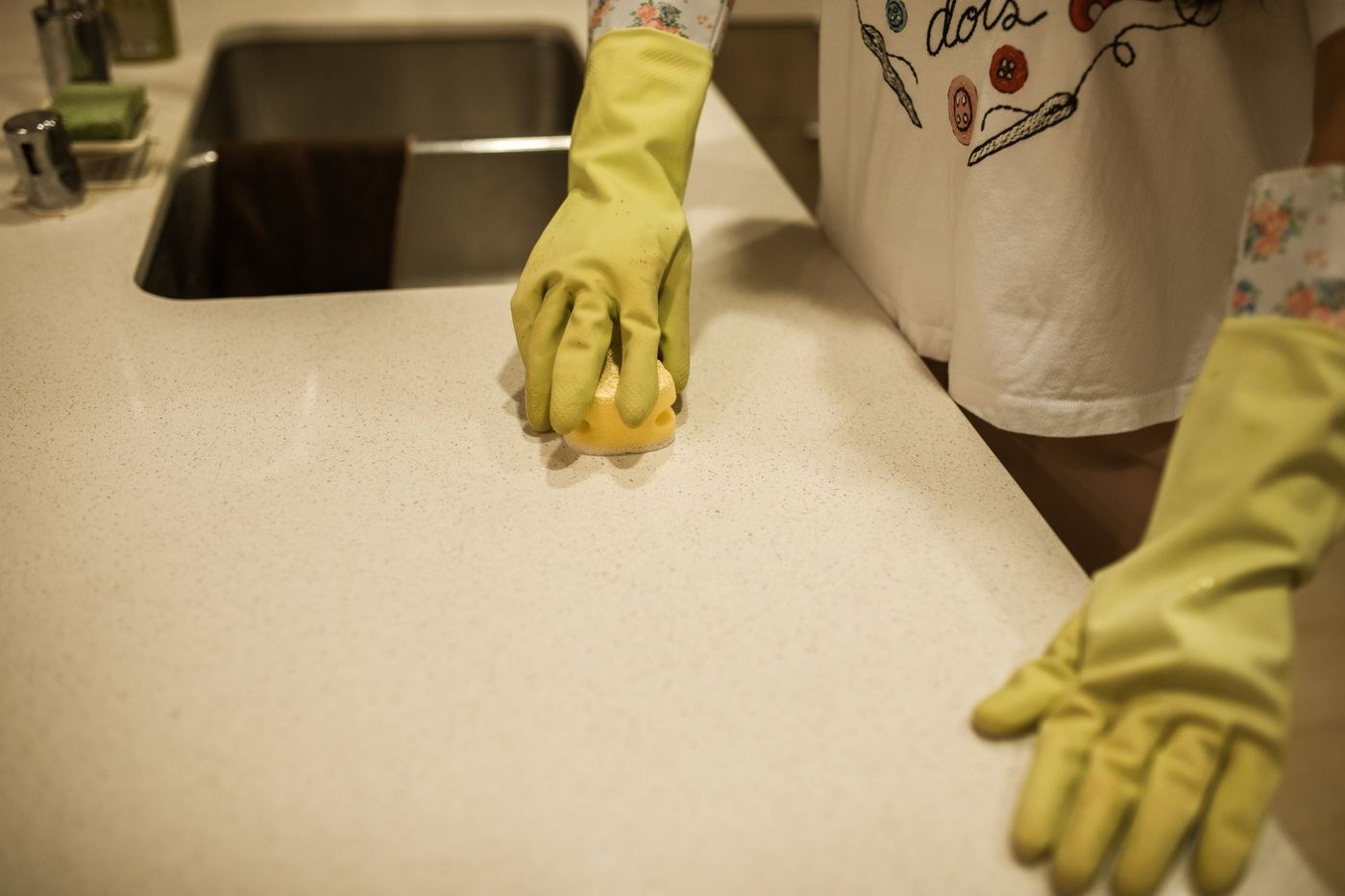
A kitchen may combine several materials: a stone worktop, a wooden chopping area, a stainless-steel sink and a laminate edge. One spray used across all of them may encounter an exclusion you did not notice. Keep care instructions for each material rather than labelling the whole room “kitchen”.
Ask the installer or supplier if the material is uncertain. The terms quartz, stone effect and natural stone do not mean the same thing. A photograph rarely establishes the finish or the manufacturer’s restrictions well enough to choose a specialist cleaner.
Deal with everyday residue first
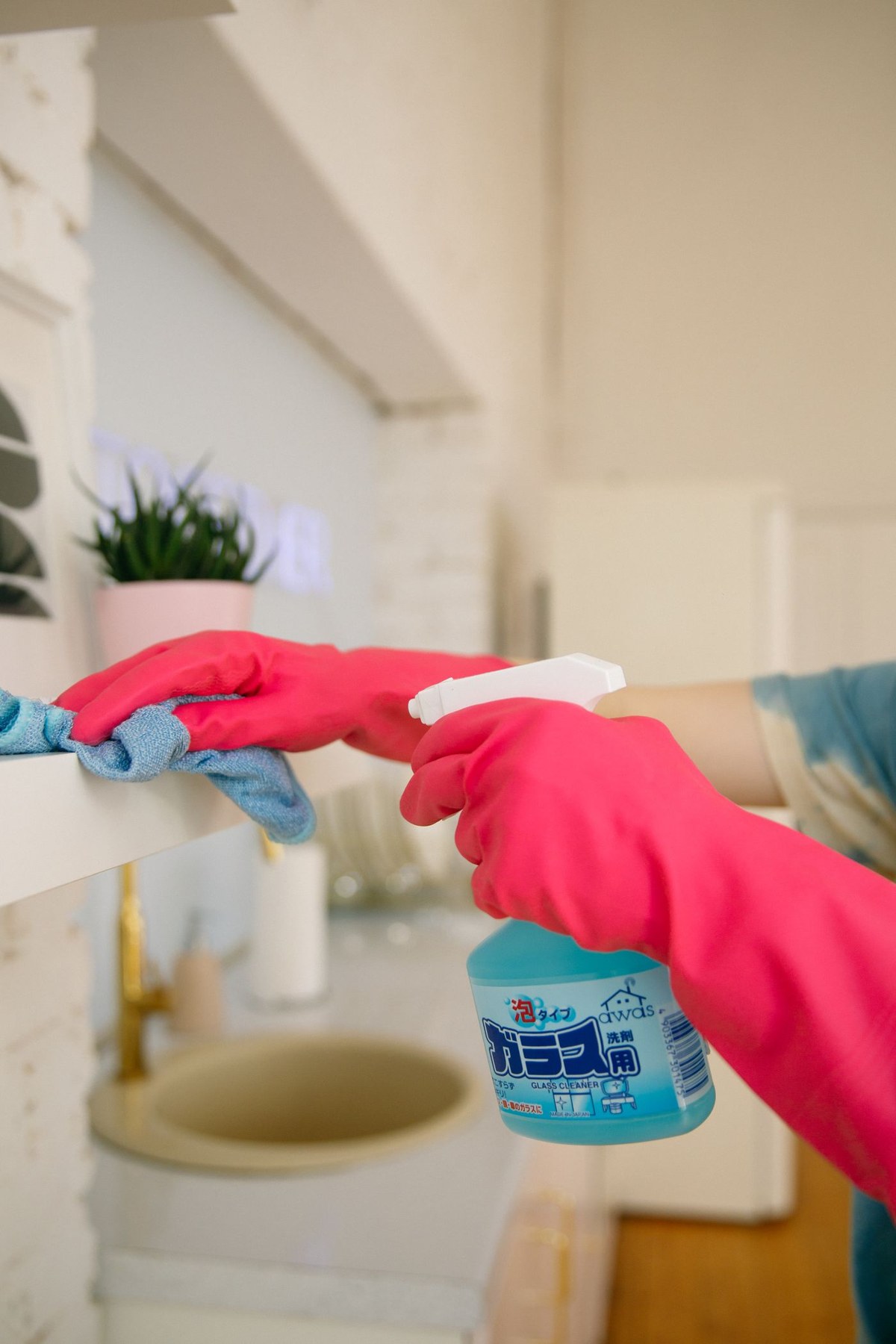
Use the compatible routine method for crumbs, grease and spills. An appropriate cloth and the stated amount of cleaner may be sufficient. Do not automatically add a disinfectant to every cleaning task; decide whether that separate process is needed for the circumstances.
If disinfection is appropriate, check that the product is permitted on the worktop and follow its contact time and food-contact rinsing directions. A surface wiped immediately dry may not have received the labelled treatment. Likewise, a product left wet for longer than necessary is not automatically more suitable.
Avoid damage disguised as a stain
Acid can etch calcareous stone such as marble. An etched area may look like a mark but cannot necessarily be cleaned away. Repeated application of a stronger acid can worsen the surface rather than remove the apparent stain.
Check abrasive tools too. A pad that is suitable for an uncoated pan may be inappropriate for a polished worktop. If the material’s care sheet excludes a chemical or abrasive, do not override it with a general online cleaning trick.
For a stubborn mark, record what was spilled and what has already been applied. This helps the supplier distinguish residue, staining and damage. It also avoids an uninformed second treatment over a first product.
A cleaner for a counter is not a board-care product
A chopping board placed on the worktop has its own material and care instructions. Do not assume that the worktop spray belongs on it, particularly if the board is porous, oiled or has glued components. Similarly, a treatment intended to maintain wood should not be spread across a stone counter without approval.
Separate the food-contact items from the surface while choosing the method. This makes it easier to check each and prevents accidental overspray. Return them only after the worktop’s required finishing process is complete.
If a cleaner has several food-area claims, read exactly what surfaces and conditions those claims cover. “Kitchen” is a location, not a universal material approval. A narrow permitted use is still useful when it matches your task, but it should not be expanded to everything in the room.
Keep food preparation separate during the task
Move food and utensils away before cleaning. Follow the required rinse and drying steps before returning the area to use. Keep cleaning cloths separate from those used for other rooms and maintain them according to their care instructions.
Save the chosen cleaner’s full name and the worktop guidance together. If you replace either the product or the surface, review compatibility again. A method that worked for an old laminate counter does not automatically transfer to a new stone installation.