Wooden utensils: washing, drying and replacement
Wooden spoons are straightforward tools, but the way they dry and the condition of their surface matter more than a natural-material slogan.
Choose a food utensil and keep it clean and dry
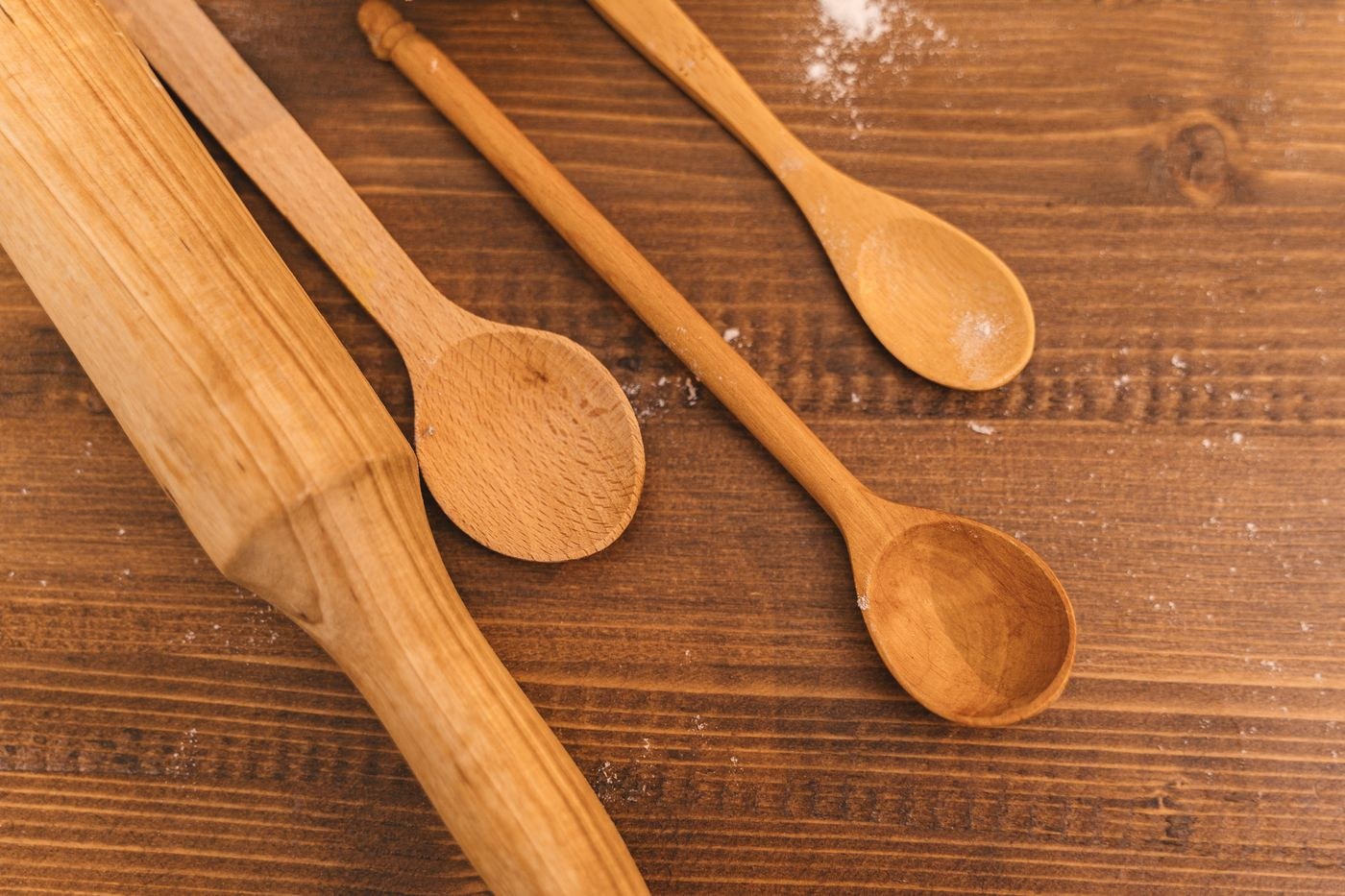
Choose an utensil identified for food preparation, with information about its finish and cleaning. A decorative wooden spoon is not necessarily cooking equipment. If the item has paint, a coating or a glued joint, ask whether those components are part of the food-contact design. Do not assume all wooden utensils share one dishwasher rule.
A spoon that reaches the bottom of the pot comfortably is easier to use without leaving the handle close to heat. Inspect the edge and handle for splinters, cracks and rough areas before first use. Grain and colour variation can be normal, but a sharp split is a physical defect rather than an aesthetic detail.
Remove food residue using the maker's permitted washing method. Avoid leaving the utensil submerged in a sink for hours while the rest of the kitchen is cleaned. Rinse it and place it where air can reach both sides. A crowded utensil pot that holds water at its base is not a good drying location.
Keep the cleaning brush or cloth suitable for food-contact items rather than borrowing one from the bathroom. If the spoon has touched raw ingredients, clean it before using it with ready-to-eat food. Wood does not remove the need to manage cross-contamination during cooking.
Where oiling is recommended, use the product and method specified for that utensil. A wood polish intended for furniture is not automatically appropriate. Oiling is maintenance, not cleaning, and it should not be used to cover a persistent smell or a surface that cannot be cleaned satisfactorily.
Recognise the end of useful service
Replace an utensil that develops a split, sheds splinters or has a joint that retains food and cannot be cleaned. Do not keep a cracked spoon merely because it still stirs. For an expensive or unusual utensil, ask the manufacturer whether a particular mark is normal before attempting sanding or another alteration.
Avoid replacing an entire set at once if only one item has failed. Note the size and shape you actually use and choose that replacement. A few clean, dry utensils that fit your pans are easier to maintain than a full pot of rarely used pieces. Store them after drying, with enough space to inspect the working ends before cooking.