Silicone kitchen tools: heat limits and product information
A silicone spatula's heat rating should describe the actual tool and how it may be used. Colour and a food-grade label do not supply those details.
Read the rating as a limit
Look for an explicit temperature limit and a description of the intended use. Stirring food briefly is different from leaving the tool resting in a hot pan or against a heating element. The rating may apply to the silicone head while the handle, adhesive or internal support has another limitation. Ask whether the specification covers the whole assembled product.
Do not assume a silicone tool can go into an oven because a silicone baking mould can. A scraper designed for mixing cold batter may not be sold for cooking. Equally, food-contact suitability does not make a tool flame-resistant. Keep it away from direct flames and use the storage or rest arrangement recommended by the maker.
Inspect the joint and the shape
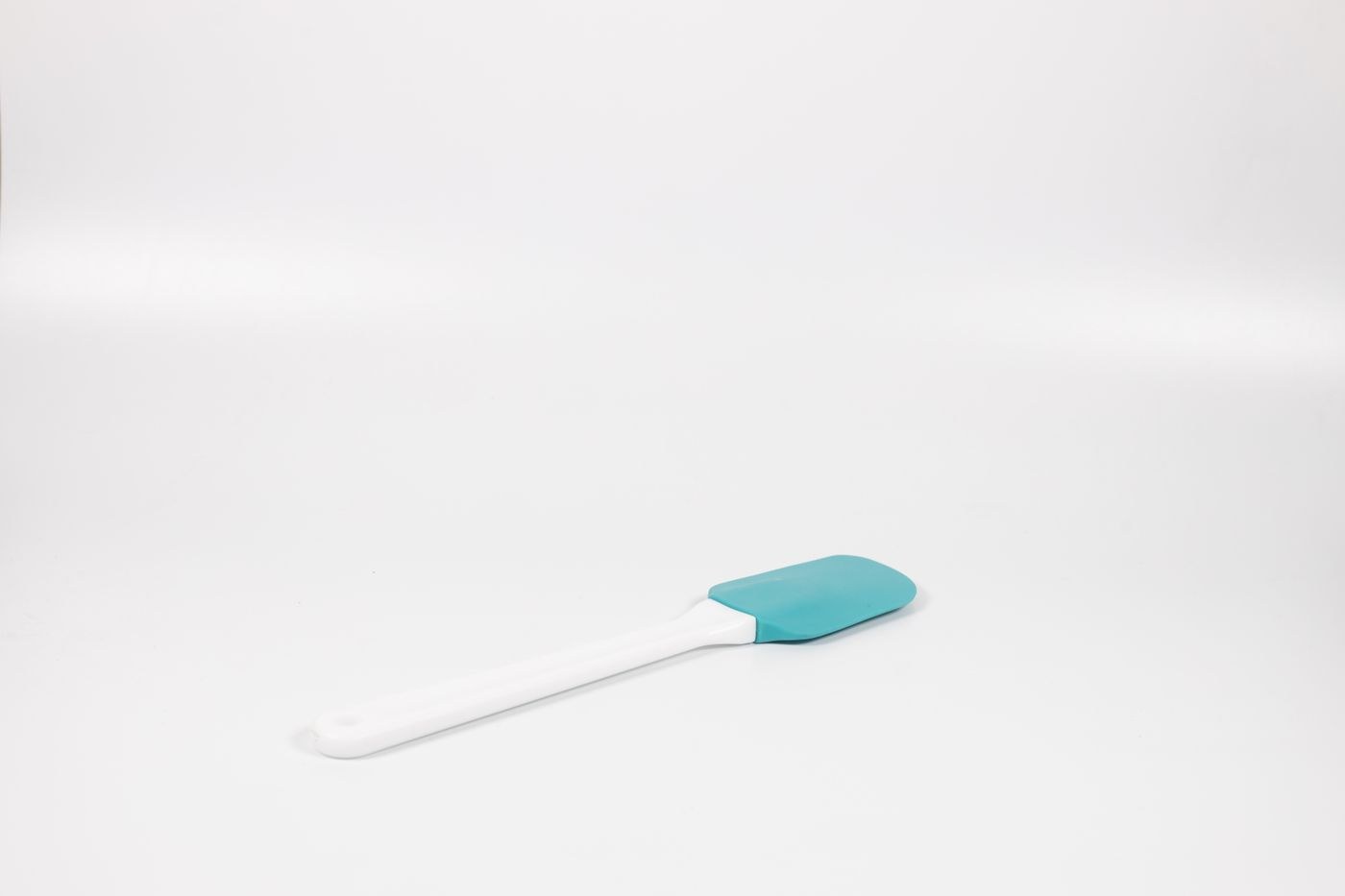
A removable head can make a joint accessible, provided the instructions say it should be removed. A one-piece design reduces the number of visible seams but still needs inspection for cuts and damage. Check whether the edge suits your pan: a very flexible tip may fold away from the food, while a thick one may not reach a narrow corner.
Consider handle length and grip when the pan is full. A short tool used in a deep pot can bring your hand close to steam. A long handle that does not fit your drawer can be awkward to store cleanly. These are ordinary usability differences, not evidence that one colour or texture is chemically safer.
Ask for the exact product specification
Buy from a seller able to identify the manufacturer and provide care information. A generic listing that combines several shapes under one rating may leave uncertainty about which version was described. Save the exact item page or instructions for the tool you receive.
Care for the surface you bought
Wash according to the label, including any dishwasher rack restriction. Remove a detachable head only as instructed, clean the permitted parts and dry the joint before reassembly. Do not use a knife to scrape residue out of the edge or cut food with the tool against a sharp pan rim.
Stop using a head that splits, exposes an internal support or becomes distorted after overheating. Ask the maker about unexplained surface changes rather than treating every odour as a laboratory result. A household smell test cannot establish composition or migration. When the correct care no longer leaves the tool clean and intact, replacement is more appropriate than an improvised coating or repair.