Reviewing a purchase after a month of ordinary use
A month of ordinary use can reveal whether an item fits your routine. It cannot turn a household observation into a laboratory safety assessment.
Return to the reason you bought it
Write down the problem the purchase was meant to solve. Perhaps a bottle lid was difficult to wash, a cleaner needed an inconvenient dilution step or a storage box did not fit the fridge. Assess the new item against that particular job instead of searching for reasons to justify every feature mentioned in the advert.
For example, if the aim was to make a water bottle easier to clean, check whether you can reach its internal surfaces, dismantle the lid as instructed and let the parts dry. A colour you enjoy is a separate benefit. It does not answer the original cleaning question, but it can still matter to whether you use the bottle.
Keep the comparison within the product's intended use. Do not test a food container with a temperature transition the manufacturer forbids, or deliberately use a cleaner on an excluded surface. Ordinary use should stay ordinary; an improvised stress test can damage the item without producing meaningful evidence.
Record observations that someone else could understand
Use descriptions such as the lid takes three separate pieces to wash, the measuring cap is hard to read in this cupboard, or the refill fits the shelf without lying on its side. These observations are more informative than saying that the product is better or worse in every way.
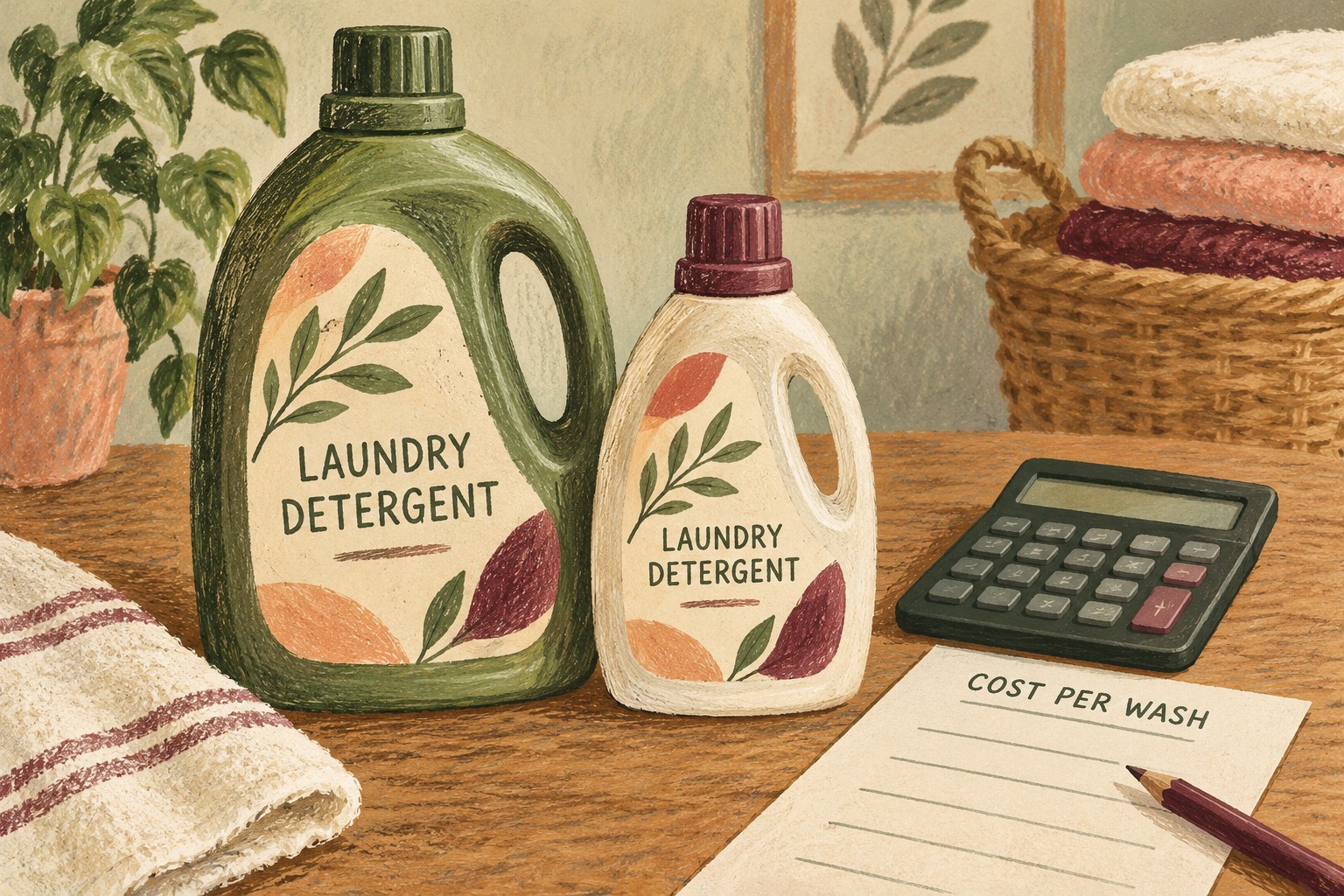
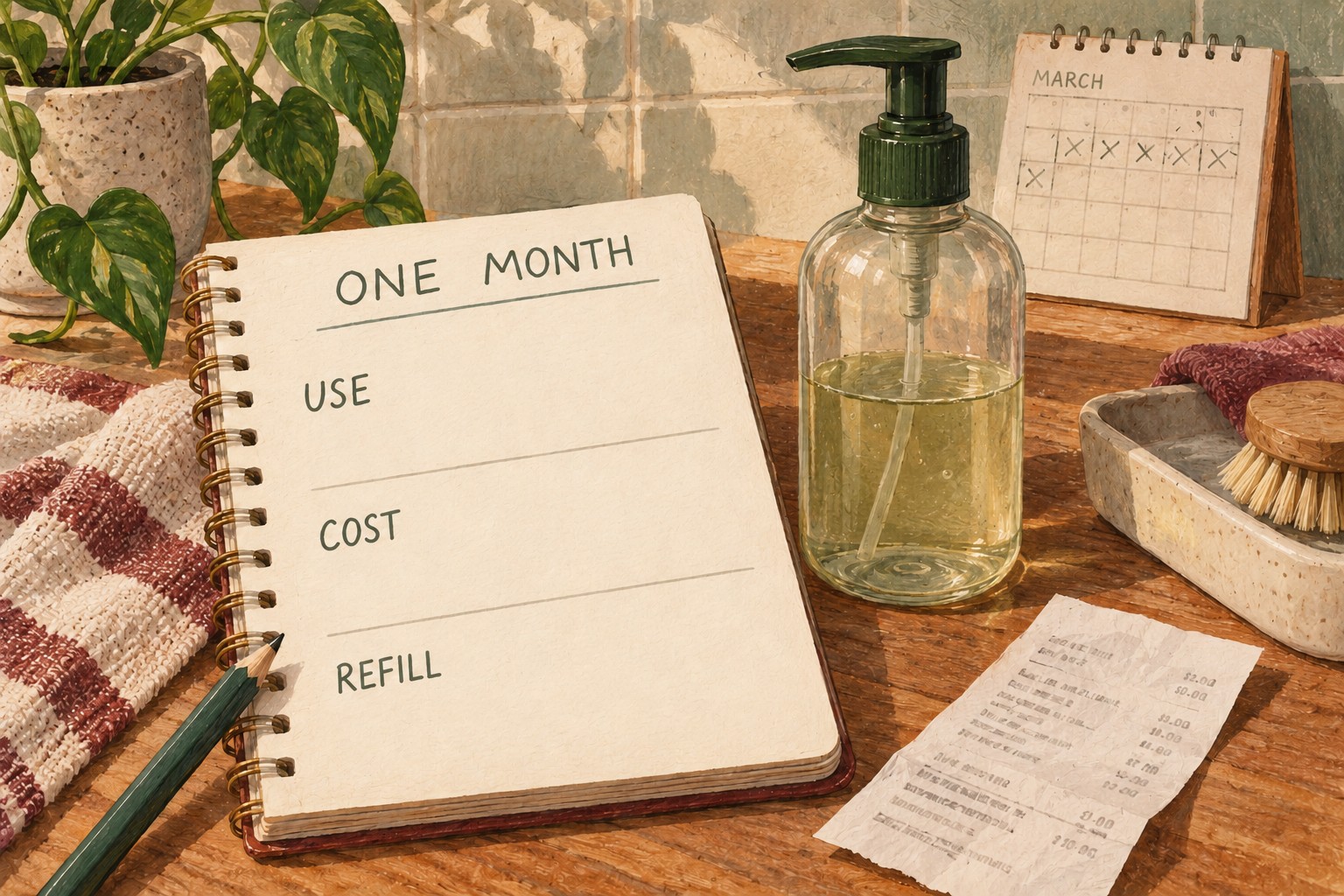
If cost matters, note the amount you actually used and whether you followed the stated dose. A large bottle lasting a long time is not automatically economical if the product was rarely used. Likewise, a concentrate cannot be fairly compared with a ready-to-use product by bottle size alone.
Keep unexpected issues separate from conclusions about their cause. A lingering smell, a leaking seam or a surface mark may justify a question to the manufacturer, but your observation alone may not explain why it happened. Save the product identification and describe the circumstances precisely.
You cannot establish that an item is free of particular substances, has lower emissions or prevents illness by liking it after a month. Those claims require the relevant evidence. A household review can assess convenience, fit, care and observed performance while leaving unmeasured properties unjudged.
Choose a next step, not a verdict on everything
Decide whether to keep using the item as intended, ask a question, obtain a replacement part or choose something else next time. You may not need an immediate new purchase. A small adjustment to storage or a clearer measuring tool might address the inconvenience if it is compatible with the manufacturer's instructions.
If you share a public review, identify the exact version and describe your actual use. Avoid repeating an advertising claim as though you personally verified it. The FTC's review guidance reminds shoppers to look beyond ratings and consider the source of a review; the same care helps when writing one.
Keep a short note for the next purchase rather than a score for every object you own. One sentence about what worked, one about what did not and one about what to check next time can make the next decision more informed without creating another household chore.