Start with a household product inventory
A household inventory can prevent buying replacements for products you already own. It should record useful information without turning the whole home into a scoring exercise.
Choose one cupboard and a few fields
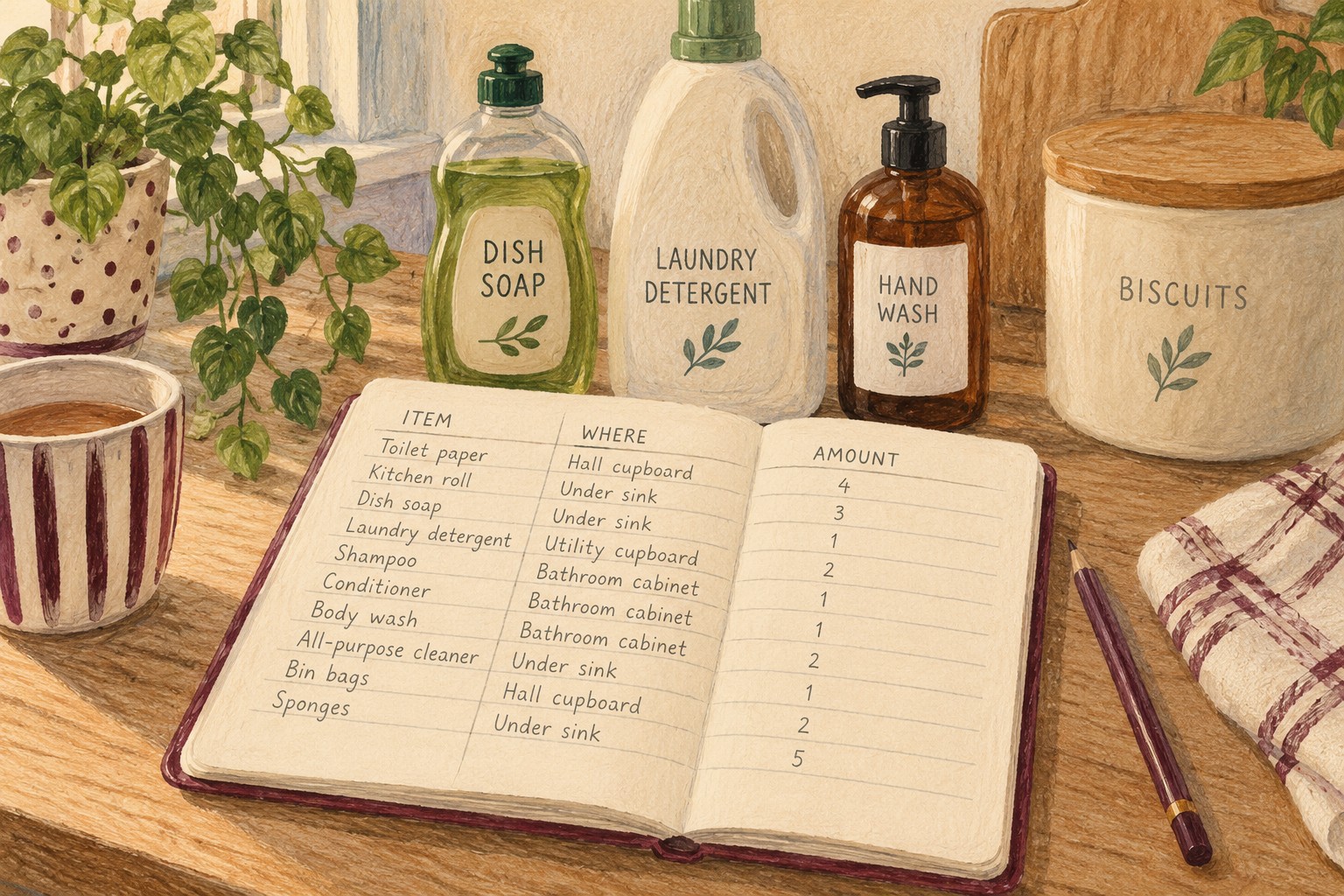
Start with a manageable area, such as laundry supplies or everyday toiletries. Leave products in their original containers while checking them. Record the name, job, approximate amount remaining, opening or expiry information where relevant and the storage location. There is no need to estimate chemical exposure from a shelf photograph.
Add a short note about the instructions that affect use: dilution, compatible surface, fragrance preference or a refill code. Photograph a label if it contains details you may need later. Do not cover warnings with inventory stickers or transfer products into matching jars to make the list look tidier.
Separate products that are in use from unopened backups. An opened bottle and a spare are different purchasing situations. Ask other household members before deciding that an unfamiliar item is unused; it may serve a specific task you do not handle.
Turn observations into a short action list
Mark duplicate jobs rather than labelling products good or bad. Two cleaners may both handle the same surface, while another apparently similar bottle has a different purpose. Read directions before deciding that one can replace another. Do not combine the remaining contents to save space.
Set aside damaged, leaking, unidentified or expired products for appropriate advice or disposal, keeping them secure. Do not try to identify an unknown liquid by smell or by mixing it with something else. Check the local waste route for the actual product type. An inventory is not permission to pour unwanted chemicals down the drain.
Make three small lists: use the suitable stock already open, obtain information about an uncertain item and buy only what is genuinely missing. For example, you may discover that the next purchase should be a replacement bottle seal rather than a whole new set of containers.
Review the list when an item runs out rather than repeating a full audit every week. Update the amount approximately; exact millilitres are rarely necessary. A useful inventory makes the next shopping decision easier and keeps product identities clear, without encouraging an unnecessary clear-out of functioning items.