Reading household chemical warning pictograms
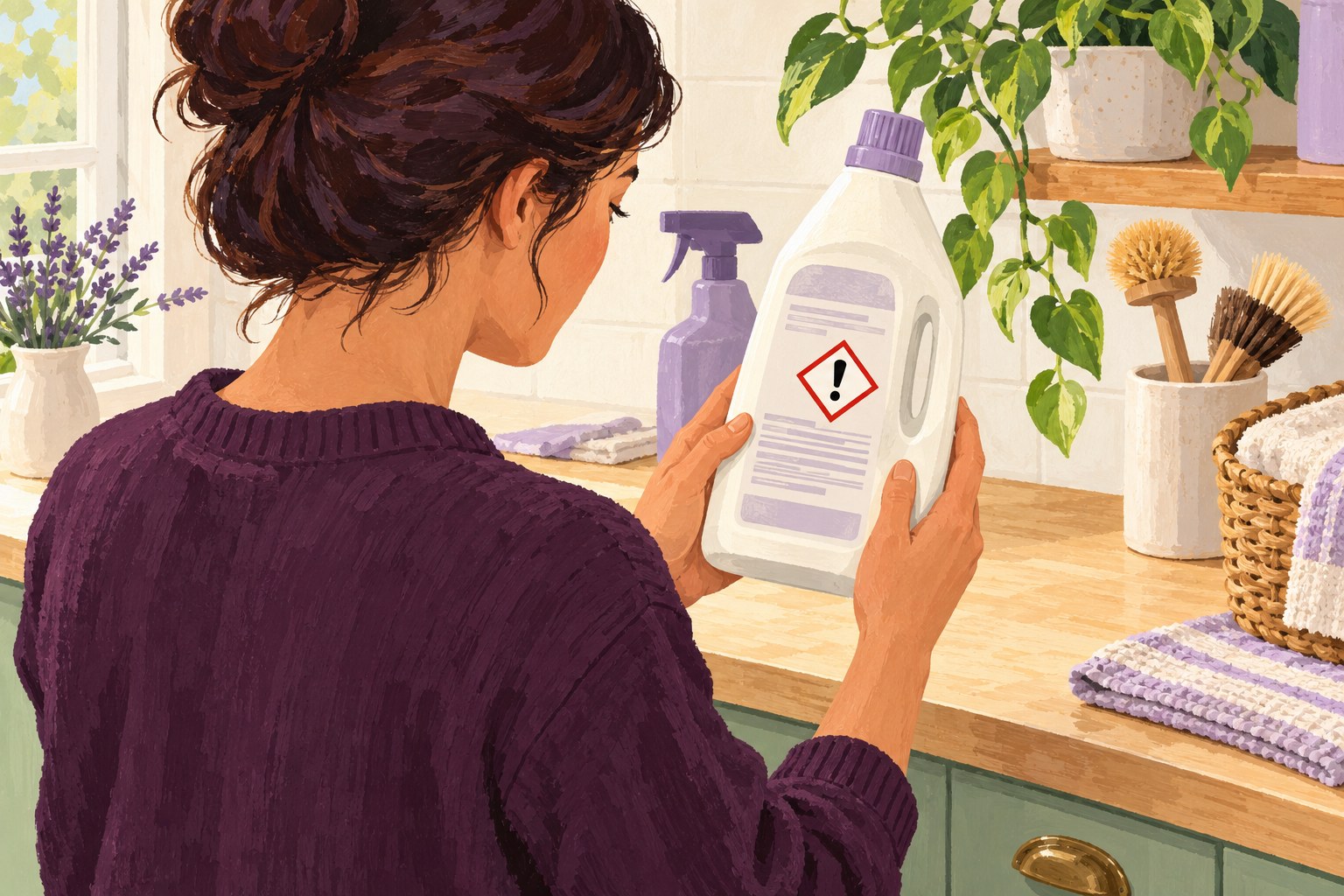
A warning pictogram is an entry point to the label. Its accompanying words explain the hazard and the precautions for the specific product.
Read symbol and text together
In systems based on the Globally Harmonized System, pictograms use recognisable symbols within a red diamond. The surrounding signal word, hazard statements and precautionary statements provide essential detail. A flame, for example, should prompt you to read the ignition and storage instructions rather than make assumptions from the icon alone.
The exact requirements depend on jurisdiction and product category. Great Britain and Northern Ireland have distinct regulatory arrangements described by HSE. A consumer should not assume that every product sold worldwide will display information in precisely the same format.
Translate the label into preparation
Before opening a product, identify what the warnings require you to arrange. That may include ventilation, gloves, eye protection, separation from heat or secure storage. Check whether you can meet those conditions in the place where the task will happen.
Do not wait for a splash or strong smell to look for first-aid information. Locate it while the pack is closed and readable. Keep the full label with the product so that someone helping you can identify it quickly if needed.
Do not rank products by icon count
Two cleaners may have different warnings because they contain different mixtures or concentrations and are intended for different uses. Fewer pictograms do not establish that one is the best choice for your surface, and more pictograms do not describe the probability of harm under every possible use.
For example, a concentrate can impose measuring and handling demands that a ready-to-use format avoids. The comparison should include those demands, the task and the user. A product without a particular symbol still needs its directions followed and should not be swallowed, mixed or transferred into food packaging.
Watch for information lost during refilling
An original bottle’s warnings apply to its identified contents. Refilling it with another product while leaving the old label can create a misleading situation. An unlabelled decorative bottle removes even more information. Use only the refill or dilution system the manufacturer permits and preserve the correct labelling.
Do not cover warning panels with organisational stickers. If labels become unreadable, ask the supplier how to identify and handle the product rather than using it from memory. A bottle’s colour and scent are not reliable identifiers.
Distinguish container damage from label interpretation
If a bottle is leaking, bulging or otherwise damaged, recognising its pictogram is not enough to decide how to move or dispose of it. Seek product-specific advice and keep people away from the problem. Do not transfer an unknown or damaged product to another container as an organisational task.
The label can help identify whom to contact and what information to provide. Its value is greatest when it remains readable and attached, which is another reason to inspect stored products before a hurried cleaning job.
Make an unfamiliar symbol a reason to pause
You do not need to memorise every category before buying household products. If a warning is unfamiliar, consult the regulator’s explanation or ask the supplier. Avoid guessing from an image search that may show an old or foreign label system.
When the precautions make a task impractical, look for a different suitable method. Do not remove the warning from consideration because the product is advertised as green or natural. Environmental positioning and hazard communication answer different questions.
Keep a simple household rule that original labels remain attached and products are never mixed. That rule helps even when individual users have different levels of technical knowledge, and it reduces reliance on one person remembering every symbol on every bottle.