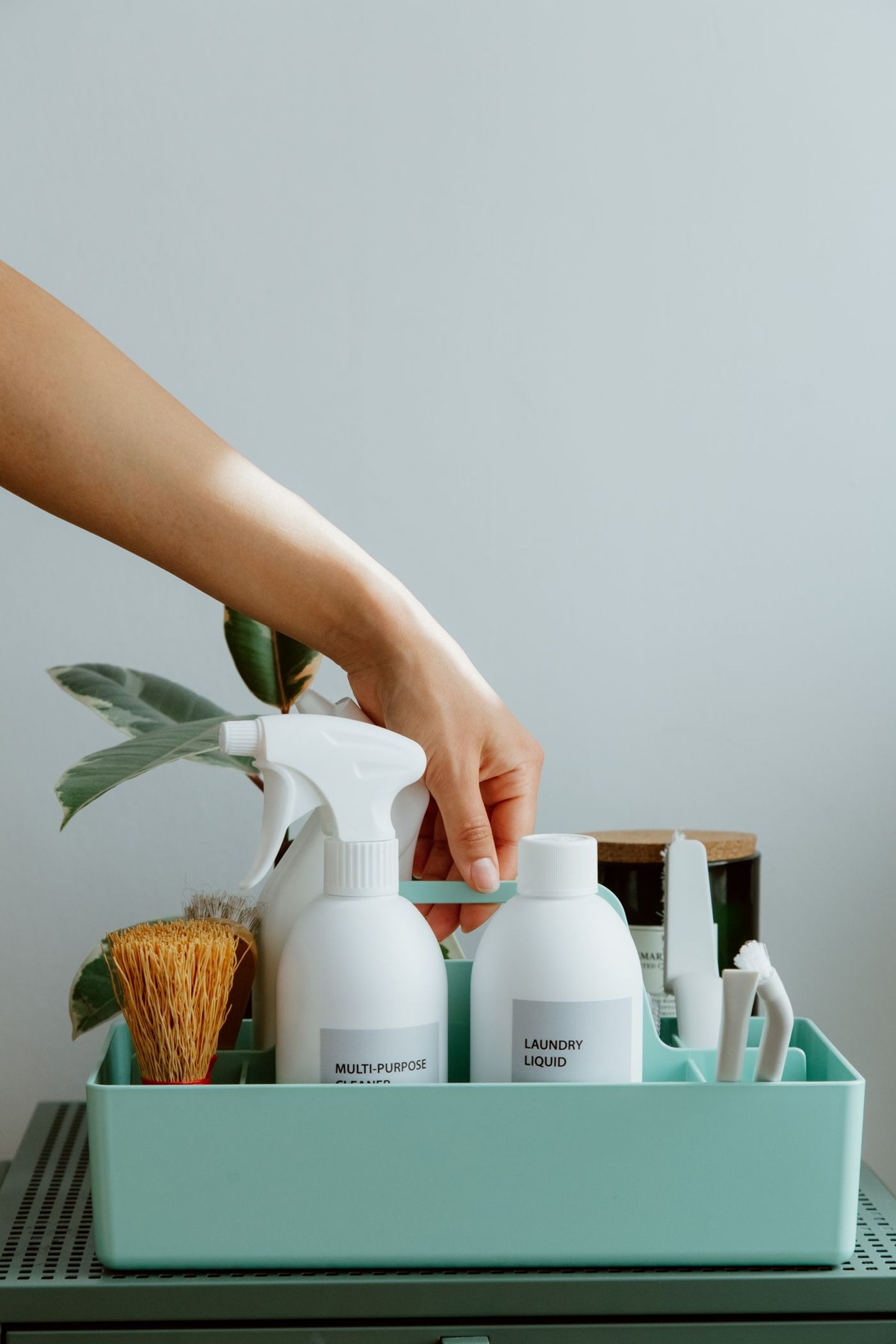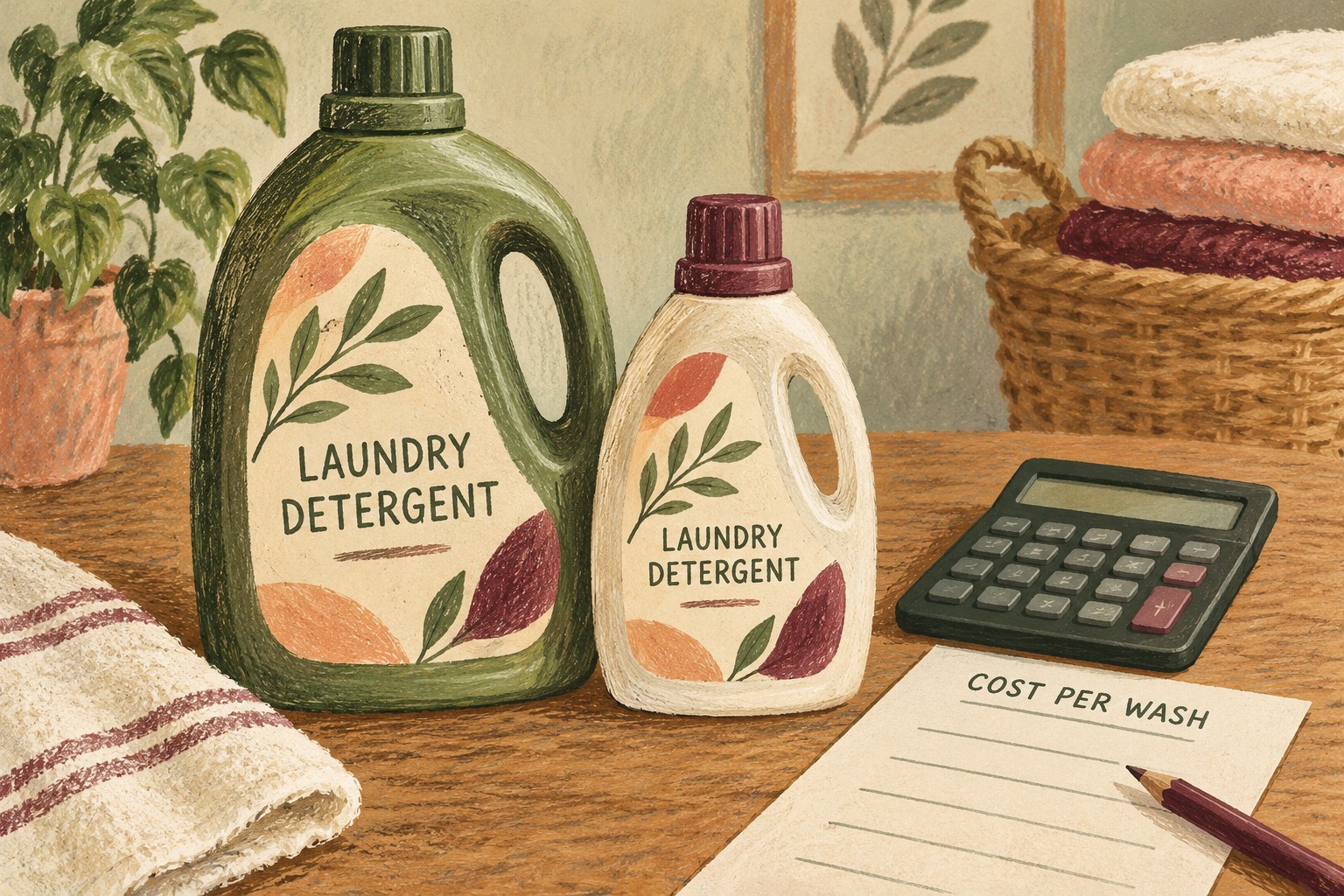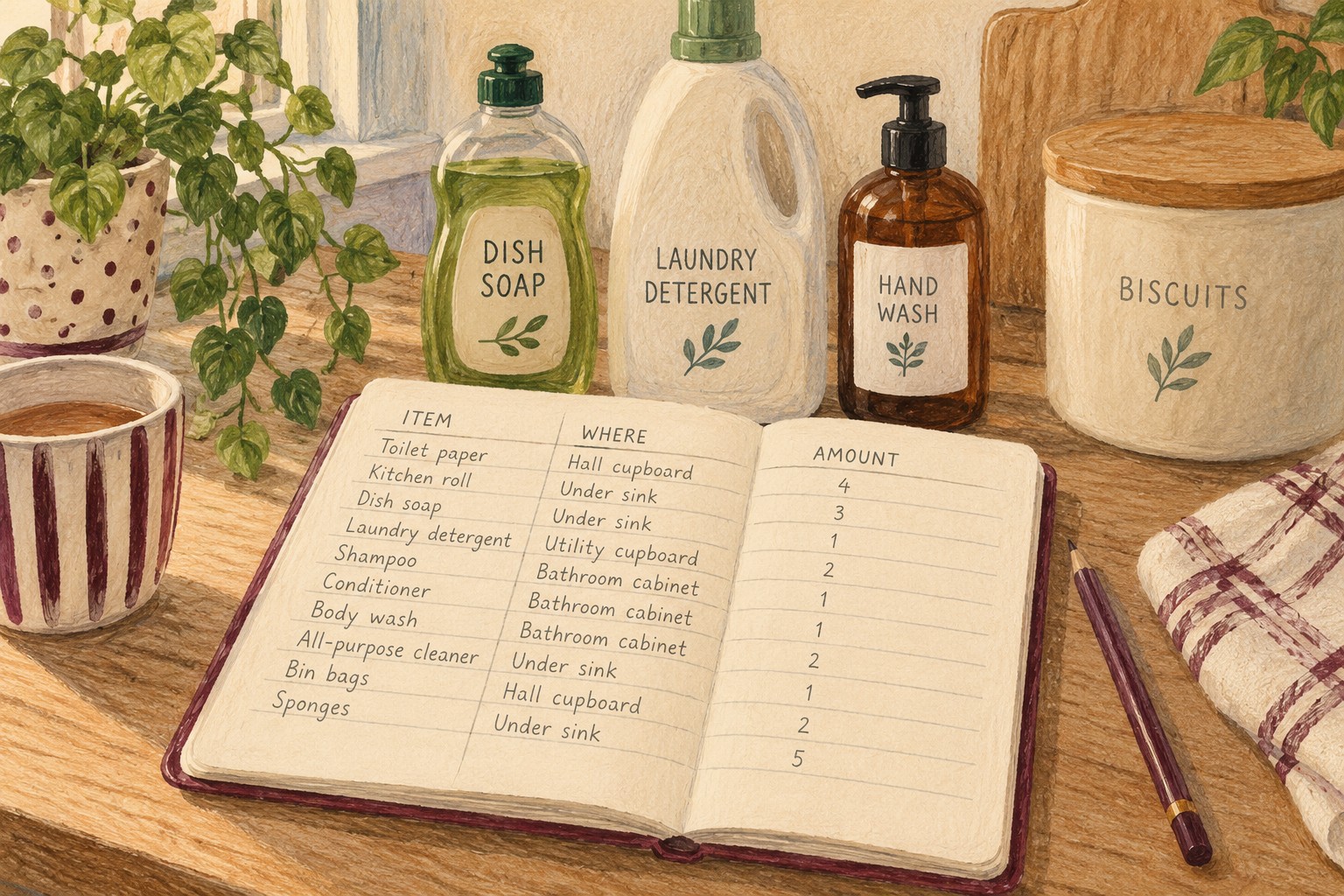
Planning a household refill station without losing labels
A refill area should preserve product identity and instructions. A row of matching dispensers is not a useful result if nobody can tell what is inside them.
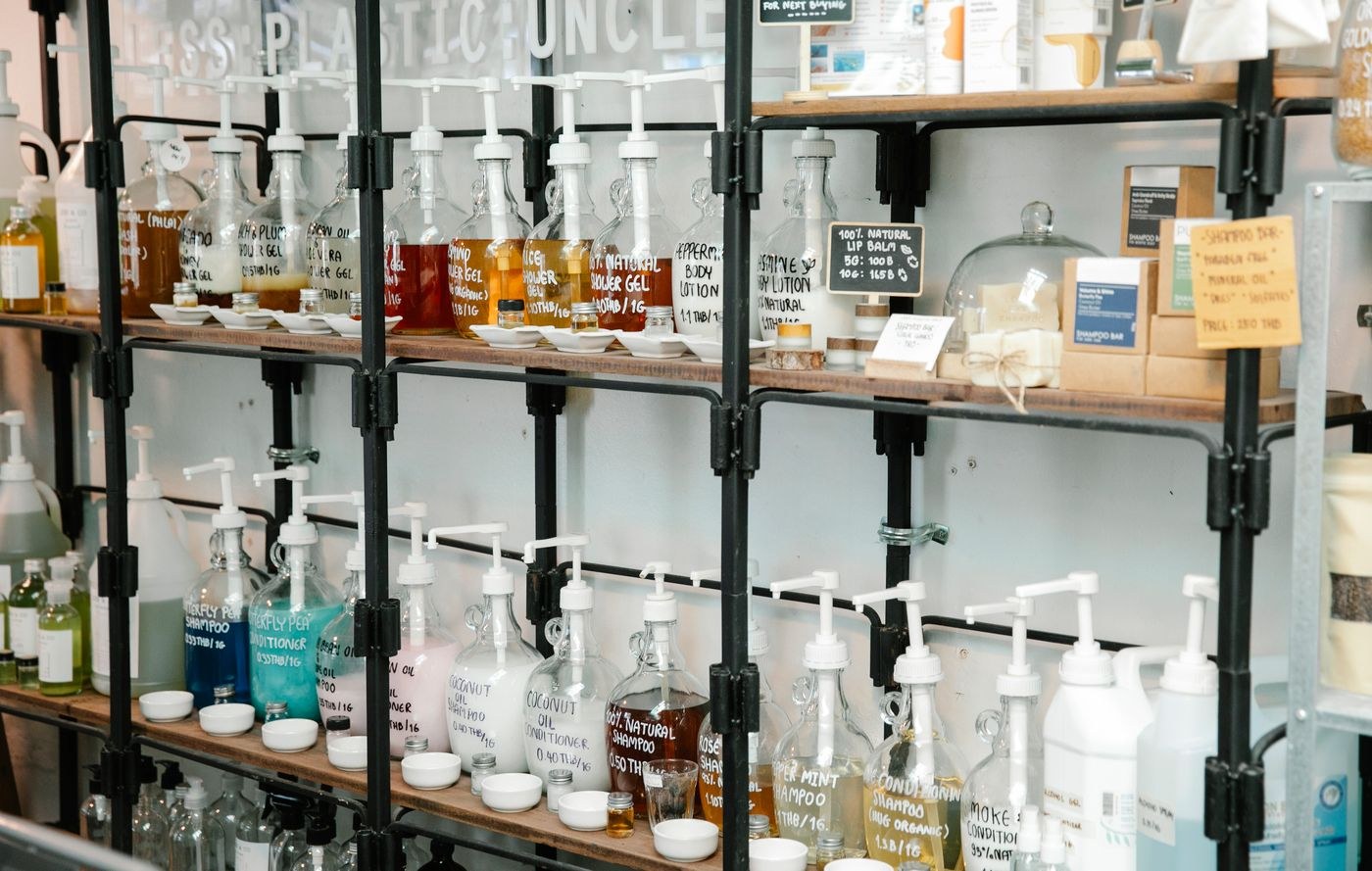
Choose the system before the shelf
Begin with a product that the manufacturer actually supplies as a refill system. Check which bottle or dispenser is intended for it, how it should be prepared and whether the refill is ready to use or concentrated. A large container is not automatically a refill for every small bottle with a matching colour.
Do not include products whose instructions prohibit refilling or transferring. Hazardous household products need particular care: EPA advises keeping them in their original containers with labels intact. A decorative food jar or drinks bottle is not an acceptable replacement just because its lid fits.
Make separate decisions for toiletries and household cleaners. They have different uses, and a similar-looking pump does not make their contents interchangeable. Position the supplies so a person unfamiliar with the arrangement can distinguish them without smelling the liquid or guessing from its colour.
Keep the label where the product is used
Use the manufacturer's intended labelled dispenser where supplied. Keep the product name, variant, directions and warnings readable after repeated handling. A handwritten word such as soap may be insufficient when several products have different purposes. A photograph of the refill pouch can be a useful record, but it should not be the only place essential instructions are available.
Store the current refill information with the matching product. If the manufacturer changes a formula or directions, do not keep relying on an old bottle label without checking how the new refill should be handled. Ask the supplier when the relationship between the bottle and refill is unclear.
A simple matching system can help: keep one product's refill and its dedicated equipment together in an appropriate storage area. It should supplement readable labels, not replace them with a colour code that only one household member understands.
Plan the refill operation
Follow the manufacturer's process for emptying, cleaning or drying the dispenser. Do not invent a universal rule to top up every bottle, or a universal washing method for every pump. Some components are difficult to dry internally, and a process intended for one system may not suit another.
Work with one identified product at a time. Put away food and drinks, clear a stable surface and arrange the bottle so you can fill it without balancing it at the edge of a sink. Use only equipment appropriate to the product and instructions. If protective equipment is specified, make it part of the setup rather than looking for it after opening the refill.
Stop if you lose track of a container's contents. Do not identify an unknown cleaner by deliberately sniffing it or trying it on a surface. Keep it separate and seek appropriate advice about handling and disposal. A refill routine should reduce confusion rather than create a collection of unidentifiable leftovers.
Leave the area ready for someone else
Close the dispenser and refill packaging as directed, clean up any residue using the product guidance and return the supplies to suitable storage. Keep refills out of reach of children and pets according to the product warnings. A display shelf that looks tidy may still be the wrong storage location.
Check that the next person can find the instructions and recognise which product is ready to use. Concentrate should not look identical to a prepared solution. Where a manufacturer permits preparing a diluted solution, follow its exact labelling, quantity, storage and use-time directions; do not extrapolate from another brand.
Start with one product and see whether the routine is manageable. If the setup requires more care, equipment or space than you can reliably provide, a different packaging format may fit your household better. The refill itself is only one part of the decision; keeping the product identifiable through its whole use cycle matters too.