Nonstick pans: use and temperature instructions
For a nonstick pan, temperature control and compatible utensils are part of the product choice. A coating claim cannot replace the use instructions.
Know what is being described
Nonstick describes a function, not one single coating material. Ask the manufacturer what the cooking surface is and which claims apply to it. A PFOA-free statement, for example, is not the same statement as PFAS-free. Nor does either phrase tell you how the handle tolerates oven heat or which utensils may be used.
The pan body and coating can also have different roles. Aluminium may provide heat transfer beneath a coating; a steel base may support induction use. Compare the finished pan's instructions rather than judging it from one material word in the product name. If the retailer omits the care sheet, ask for it before buying.
Avoid turning preheating into overheating
Health Canada advises against preheating empty nonstick cookware and against high-heat use. Follow the pan maker's specific directions and any more restrictive local safety guidance. A maximum temperature is a limit, not a suggested everyday setting. An unattended empty pan can heat differently from a pan containing food and liquid.
Use an appropriate cooking zone and stay with the pan. If you need prolonged high-temperature searing, choose cookware explicitly designed for that task rather than trying to force a nonstick pan beyond its intended use. Use kitchen extraction or ventilation while cooking. Do not store the pan in an oven that may later be switched into a self-cleaning cycle.
For oven use, check all parts. A removable handle does not automatically make the remaining pan grill-safe, and a lid may have a lower limit than the body. Keep a note of the complete product's restrictions if several pans in your kitchen have different permissions.
Protect the coating during cooking and storage
Use utensils compatible with the coating, including when serving directly from the pan. Avoid cutting food inside it. If the instructions permit only soft cleaning tools, a metal scourer is not a shortcut for stuck residue. Allow cooling and use the maker's approved cleaning process rather than adding a strong oven cleaner.
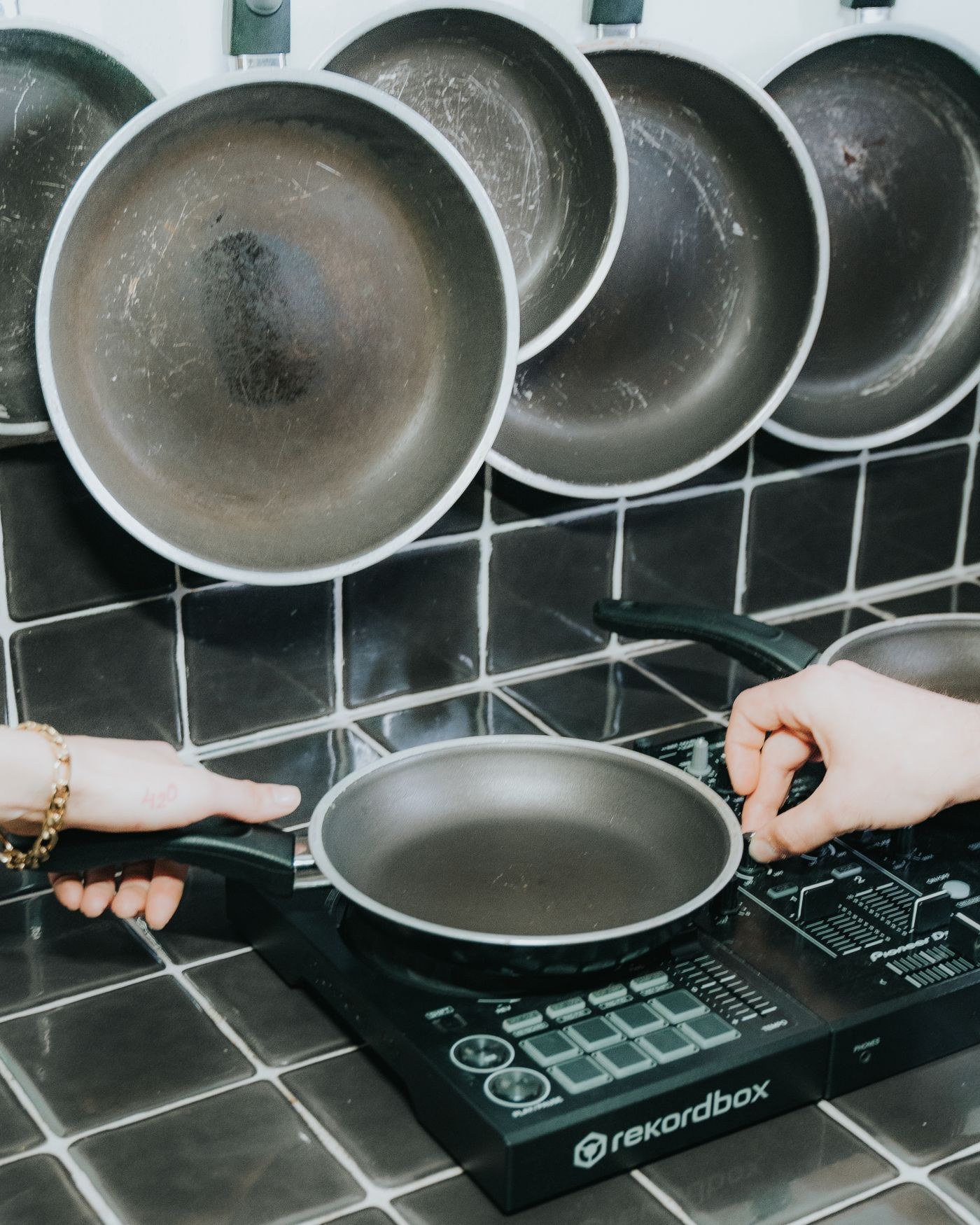
Stacking can put another pan's base against the cooking surface. Leave enough space or use an appropriate separator if the manufacturer recommends one. Check that the separator is clean and dry. Storage should not require scraping the pan against a metal rack every time it is removed.
Respond to damage without guessing
Inspect for peeling, flaking, substantial scratching, distortion and loose handles. Stop using a visibly failing coating and ask the manufacturer about replacement or assessment. Do not sand, recoat or cover damage with a household repair product. A change in cooking performance is a reason to investigate technique and condition, not proof of a particular chemical exposure.
When replacing the pan, record why it failed. If the previous one was repeatedly used for a cooking method outside its limits, buying a different colour of the same design will not solve the mismatch. Choose the next pan around the temperatures, portion sizes and cleaning routine you can actually maintain.