Choosing a reusable water bottle you can clean
A bottle earns its place in a daily routine when its neck, base and closure can be reached, washed and dried without guesswork.
Look through the opening
Before choosing capacity or colour, check how you will reach the bottom. A wide opening can admit a brush more easily, but the brush still needs the right length and head shape. A bottle that looks simple outside may have internal shoulders or a narrow recess that is difficult to inspect. Consider whether you can see the surfaces you need to clean.
Think about the drinks you actually carry. Plain water, coffee, milk-based drinks and smoothies leave different residues, and not every bottle or cap is designed for all of them. Choose a product with instructions for your drink type rather than stretching a cold-water bottle into a hot-drink flask. Carbonated drinks may also be excluded by particular closures.
Count the lid components
Ask how many pieces must be removed for routine cleaning. A straw, valve, mouthpiece and gasket can be convenient during use while adding work afterwards. A diagram showing the intended disassembly is more useful than a general easy-clean claim. Do not buy a mechanism that depends on removing tiny pieces you cannot comfortably handle.
Check replacement availability for the parts most likely to be lost. A bottle with an available seal or cap may remain usable after a small failure. Compatibility needs to include the precise mouth size and model generation. A cap that screws on does not necessarily share the original drink or temperature permissions.
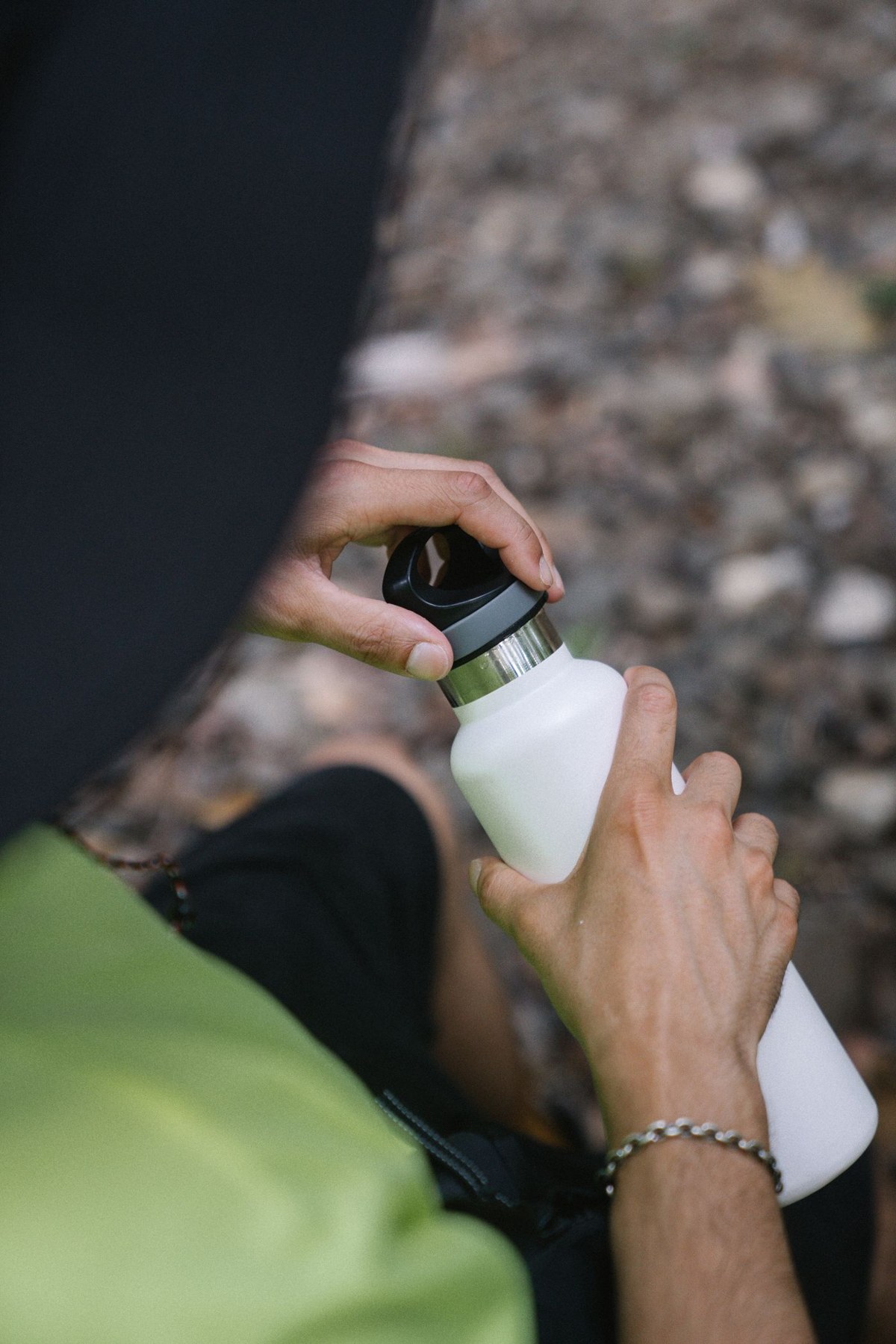
Hydro Flask's cap information illustrates why this matters: its cold-drink straw and chug caps have different intended uses from hot-drink caps. That is a product-specific example, not a rule that all lids from every company behave alike.
Fit cleaning into the day
Read dishwasher instructions before relying on the dishwasher. Some bodies, finishes and lids have different requirements. If hand washing is required, make sure the bottle fits your sink and can drain securely. Separate permitted components, wash as directed, rinse and allow them to dry before closed storage. A quick refill is not a substitute for cleaning.
Choose a size you can carry comfortably when full. An oversized bottle left unused because it is heavy has no advantage over a smaller one refilled when suitable water is available. A straightforward closure and accessible cleaning surfaces may matter more than multiple drinking options. Keep the original care sheet so cleaning remains consistent when the bottle passes between household members.