What hypoallergenic on a cosmetic label can and cannot tell you
Hypoallergenic is not a promise that nobody will react. The exact formula and an individual’s known sensitivities still matter.
Read the claim in its market
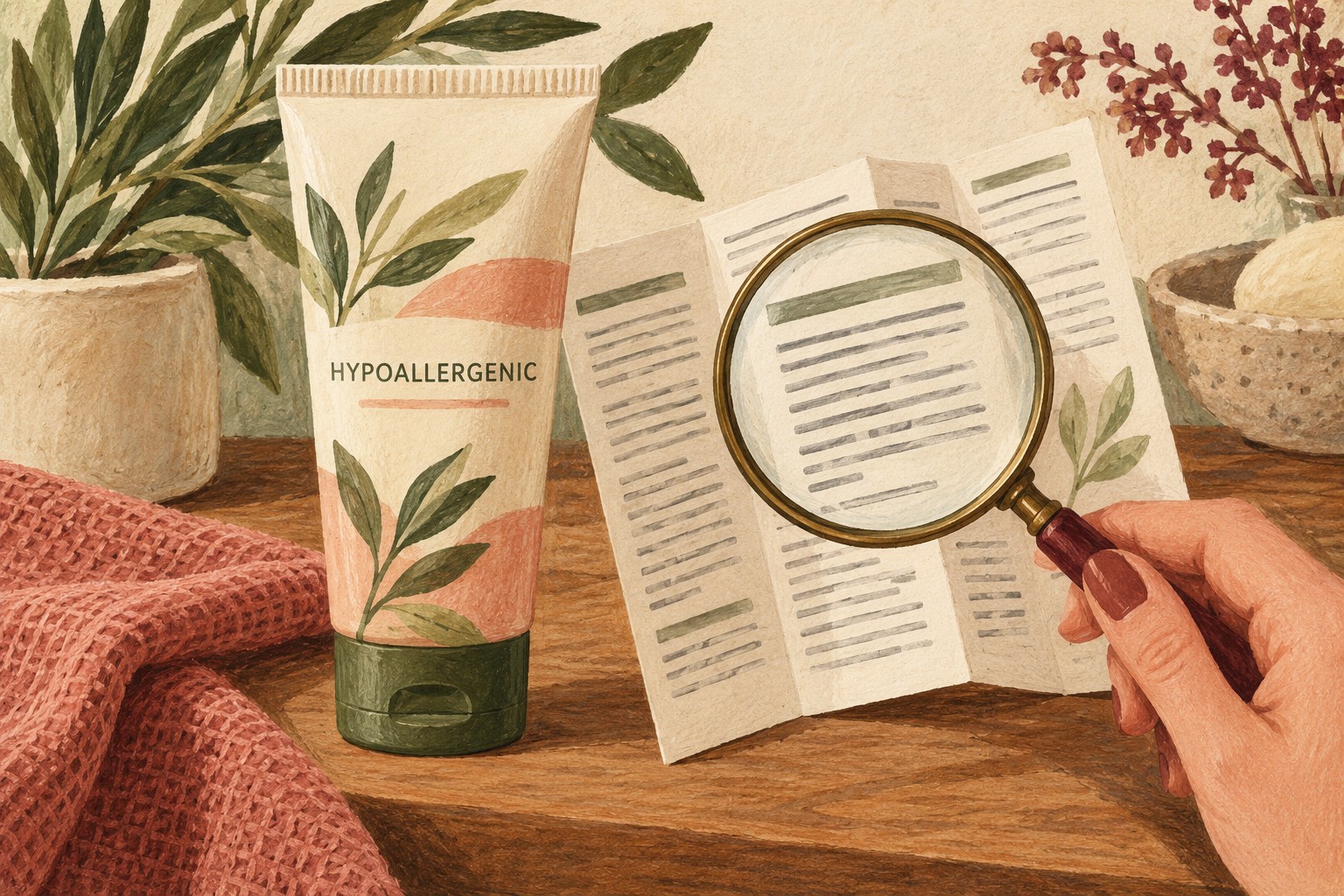
FDA states that there is no federal standard or definition governing hypoallergenic on cosmetics in the United States. This makes it especially important not to read the word as a guarantee. Other markets have their own rules and guidance, so a US statement should not be presented as a universal account of every label.
Even when a company has evidence behind a claim, ask what was evaluated. A test involving a group of participants under stated conditions does not establish that every future user will tolerate the product. “Tested” needs context: the method, the participants and what outcome was measured.
Use the ingredient list for a specific purpose
If a clinician has identified an allergy, their advice gives you a focused reason to check ingredients. A broad marketing word is not a replacement for that check. Ask about alternative ingredient names if the declaration is unfamiliar, and verify the current formula rather than relying on an old retailer photograph.
If you do not know what caused a previous reaction, do not diagnose yourself by matching a social-media list against the bottle. Several products, handling conditions and skin conditions may be involved. Recording the exact products and timing is more useful for a professional assessment.
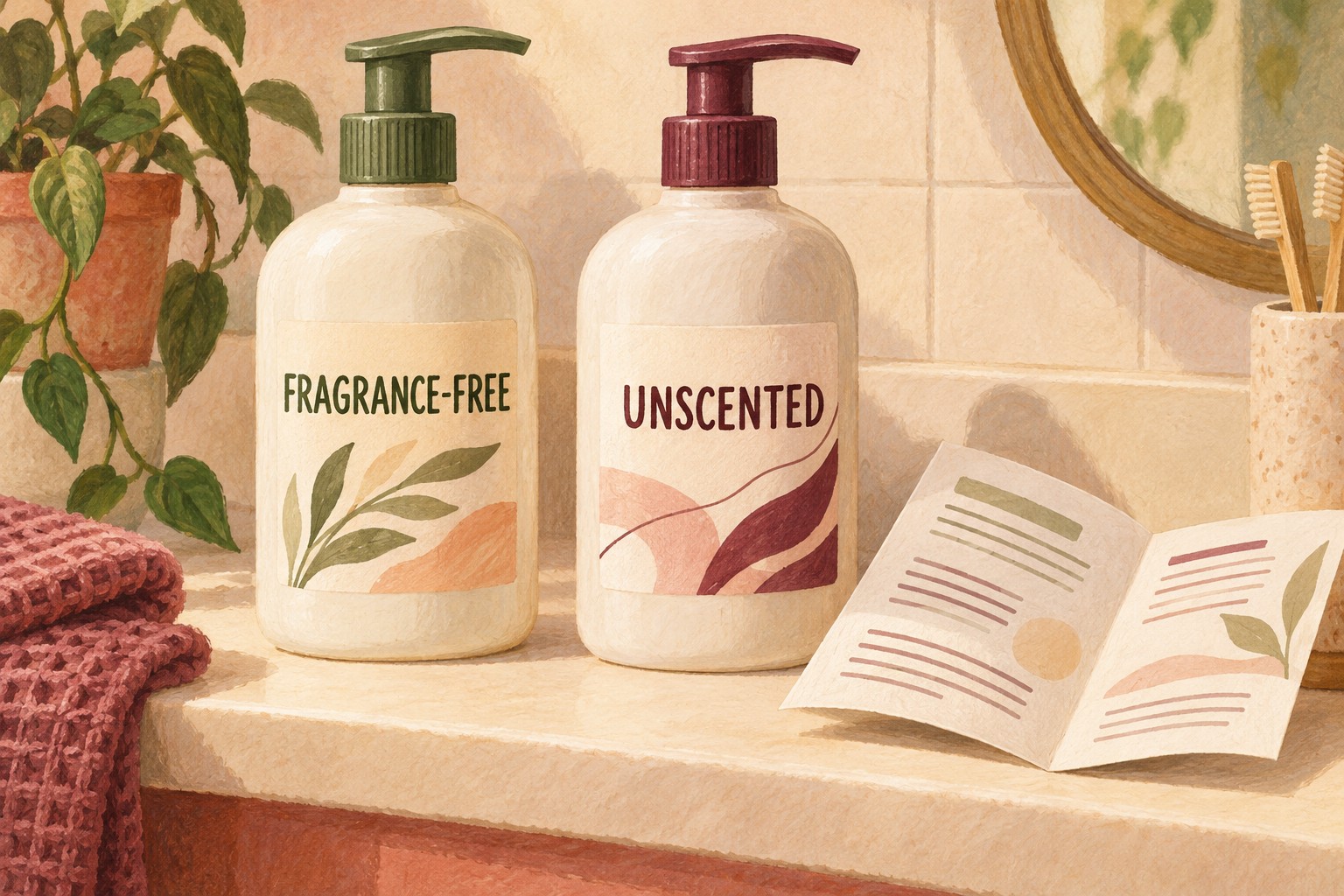
Fragrance-free, sensitive-skin and hypoallergenic are different statements. One does not automatically establish the others. A product without fragrance may still contain an ingredient to which a particular person reacts.
Questions behind a tested claim
If a brand says a product was dermatologist tested, ask what that statement is intended to establish. Was the test about tolerance under a stated use, an opinion on texture or something else? A clinician’s involvement does not automatically mean the product has been tested on everyone with your particular allergy.
You do not need to demand a full technical report for a simple purchase. A clear explanation of the claim’s scope can be enough to show whether it is relevant. If the seller only repeats the wording, treat the unanswered question as unanswered rather than converting it into reassurance.
For example, a shopper with an identified fragrance allergy needs appropriate ingredient advice and current formulation information. A broad tolerance claim on the front does not cancel that requirement. A shopper without a known allergy may instead be comparing texture and ease of use; the same claim may not be central to that decision at all.
Make a cautious purchase without making a guarantee
Ask for the complete label before buying online. Choose a manageable quantity if you are unsure about a new product, and avoid opening a bulk refill immediately. Keep the packaging and batch information until you know the product fits your routine.
Follow any manufacturer instructions for checking suitability, but do not treat a home trial as proof against all future reactions. If irritation occurs, stop using the suspected product and obtain advice where needed. Continuing because the pack says hypoallergenic reverses the purpose of paying attention to your own experience.
A useful product note might say “no discomfort during ordinary use over the last month”. It should not say “allergy-proof”. The first records an observation; the second claims far more than the observation can establish.