Solid shampoo bars: storage and everyday use
A solid shampoo bar needs a place to dry as much as it needs a place on your shopping list.
Check what kind of bar it is
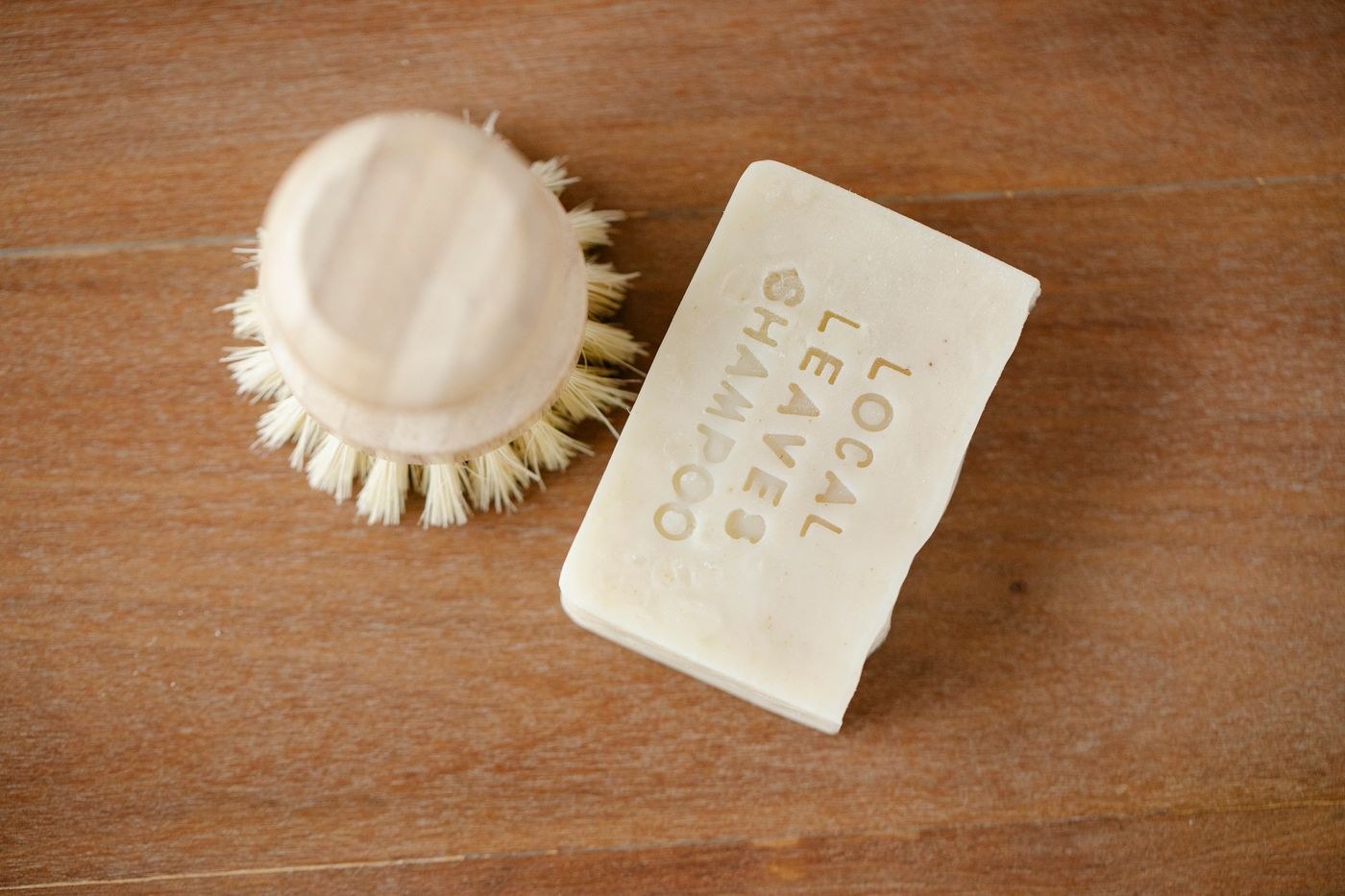
A bar shape does not tell you whether the product is intended for hair, hands or the body. Read the identity and method before buying. Some shampoo bars are worked between the hands, while others are applied directly to wet hair. Follow the maker’s method rather than assuming every bar should be rubbed vigorously across the scalp.
If the label describes several uses, check the directions for each. The convenience of a multi-purpose product depends on whether it suits those jobs in your routine. A compact format is useful for travel, but it does not automatically establish better performance or a lower overall environmental impact.
Give water somewhere to go
Choose a dish with drainage and enough air around the bar. A flat saucer can hold a puddle underneath, while an enclosed tin is more suitable for transport after drying than for permanent wet storage. Check the shelf too: drainage is less useful if the dish sits directly under the shower stream.
Clean the holder when residue builds up. A removable insert can be easier to wash than a decorative holder with deep narrow grooves. Allow both the bar and the holder to dry before packing them for a journey. If you must travel soon after washing, open the container and dry it properly on arrival.
Keep the original wrapper or a photograph of it. Once the bar is unwrapped, the product name, ingredients and directions are otherwise easy to lose, especially when several similar bars share a bathroom.
Judge cost from your own use
A claim that one bar replaces a particular number of bottles depends on washing frequency, hair length, portion size and storage. Treat it as a comparison made under particular assumptions. Record the purchase date and when the bar is finished if you want to understand your own cost per wash.
Do not force the bar to work by extending contact time or adding household ingredients to your rinse. If the method leaves your hair difficult to manage, reconsider the product and your conditioner routine. Irritation is a reason to stop and assess, not evidence that the scalp needs an adjustment or detox period.