Hair dye instructions and allergy warnings
Hair dye instructions cover preparation, allergy warnings, mixing and timing. They should be read before the day you plan to colour your hair.
Read the whole pack early
Check the product’s intended use, age restrictions, warnings and required allergy-alert procedure before opening the components. Some instructions require action in advance. Leaving the reading until you are ready to apply can mean that you cannot use the product that day as intended.
A previous uneventful application does not guarantee that a later one will be free of problems. Follow the current product’s instructions each time rather than relying on memory from another brand. Formulas, developers and testing directions may differ even when the colour name looks familiar.
If you have had a reaction to hair dye, have an irritated scalp or are unsure about a warning, seek advice before using it. A home allergy-alert test is not a clinical diagnosis and a negative result cannot guarantee that no reaction will occur.
Keep the components together
Use only the components and mixing proportions specified for that kit. Do not substitute a developer from another box, combine leftover dyes or adjust strength with household ingredients. Lay out the instructions, protective items and timer before starting so that you do not have to search while product is mixed.
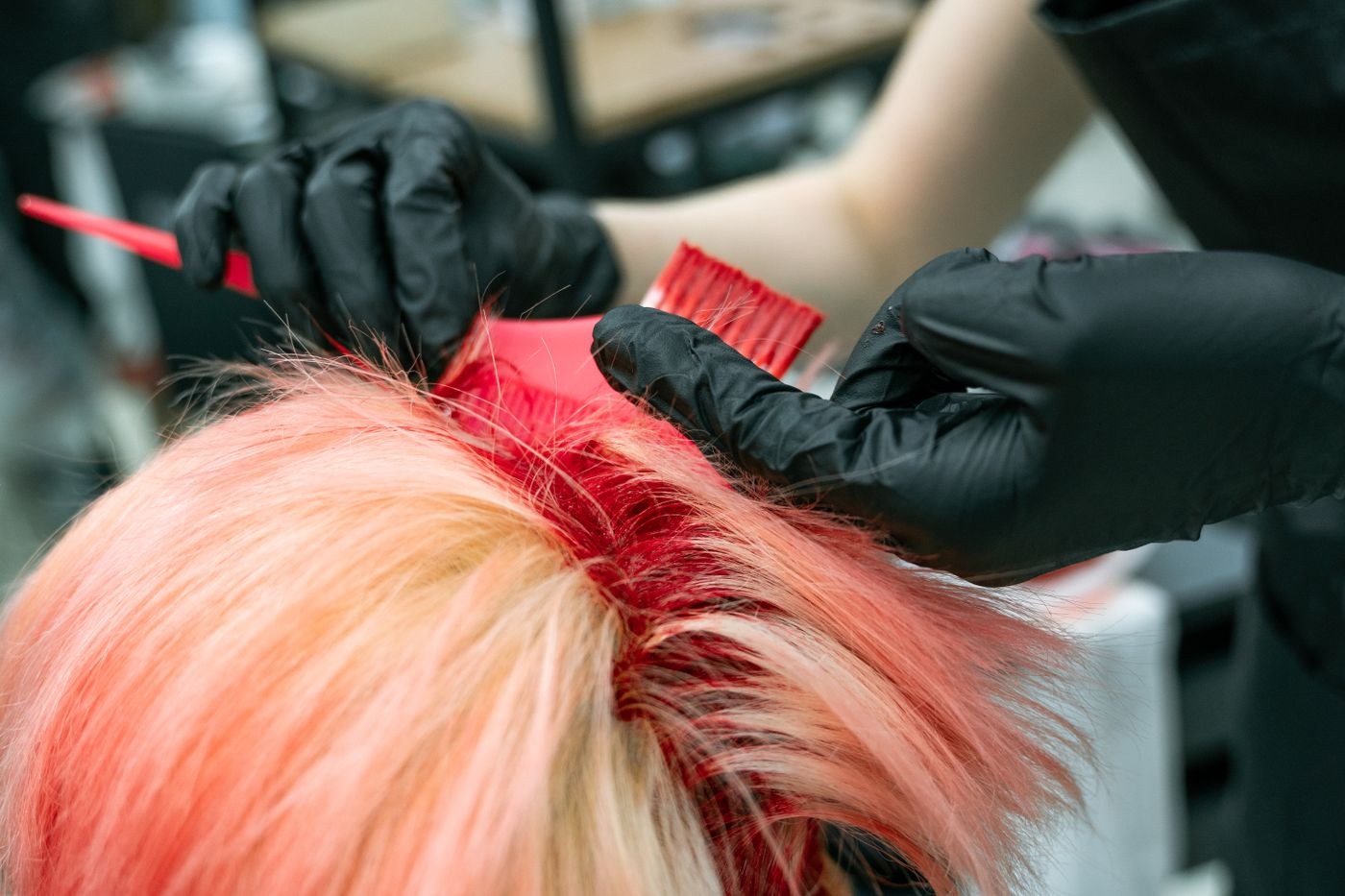
The gloves supplied or specified are part of the method. Protect the workspace as directed and keep the products away from food, children and pets. A household routine should not create unlabelled cups or bowls that someone else might mistake for something ordinary.
Follow the timing precisely. Leaving the dye longer is not a reliable way to improve the result. Do not apply scalp hair dye to eyebrows or eyelashes unless a product is specifically intended and legally supplied for that use; ordinary hair dye is not interchangeable with an eye-area product.
Distinguish allergy screening from a strand test
A strand test concerned with colour or hair behaviour answers a different question from the manufacturer’s allergy-alert procedure. One does not replace the other. Read which tests the instructions require, what each involves and how far in advance it must be done.
If the terminology is unclear, ask the manufacturer or a qualified hair professional before beginning. Do not copy the test timing from a previous kit or shorten it because you have already arranged the rest of the day. A box of dye is not useful if its required preparation cannot be completed before the planned application.
Plan a handover if someone helps
A friend applying the product should read the same instructions and know the timing, mixing and stopping procedure. Keep the box in the room rather than putting it straight in the recycling. Agree who is watching the timer so that a conversation or interruption does not change the contact period.
Afterwards, retain the product identity even if someone else purchased it. A vague memory of the shade is insufficient if you need advice about a reaction or want to repeat the colour safely under the current instructions.
Know what to do if the plan changes
If discomfort or a reaction begins, follow the product’s instructions for stopping and removal and obtain medical advice as appropriate. Severe symptoms such as breathing difficulty or rapidly increasing swelling require urgent help. Do not continue simply because the timer has not finished.
Record the product, shade, batch and date if a reaction occurs. Include other recent hair treatments when discussing the problem with a clinician. This is more useful than guessing a single culprit from a general list of dye ingredients.
Dispose of mixed leftovers according to the directions. Do not save a partly used mixed formula for a future application unless the manufacturer explicitly provides such a method. Keep unopened components with their original labels, and ask the manufacturer if any instruction is unclear before another use.