Buying cosmetic refills without contaminating the product
A cosmetic refill should be treated as a defined product-and-container system. Clean-looking packaging alone is not enough information.
Check the exact match
Confirm that the refill belongs to the product and container you own. Similar names, colours or textures do not establish compatibility. A replacement cartridge may be designed to click into an outer case without pouring, while another system may require transferring contents.
Read the refill instructions before opening either pack. If the brand gives no method for cleaning or reusing the dispenser, ask for clarification. Do not invent a procedure based on a food jar or a different cosmetic because the containers look alike.
Prepare a controlled transfer
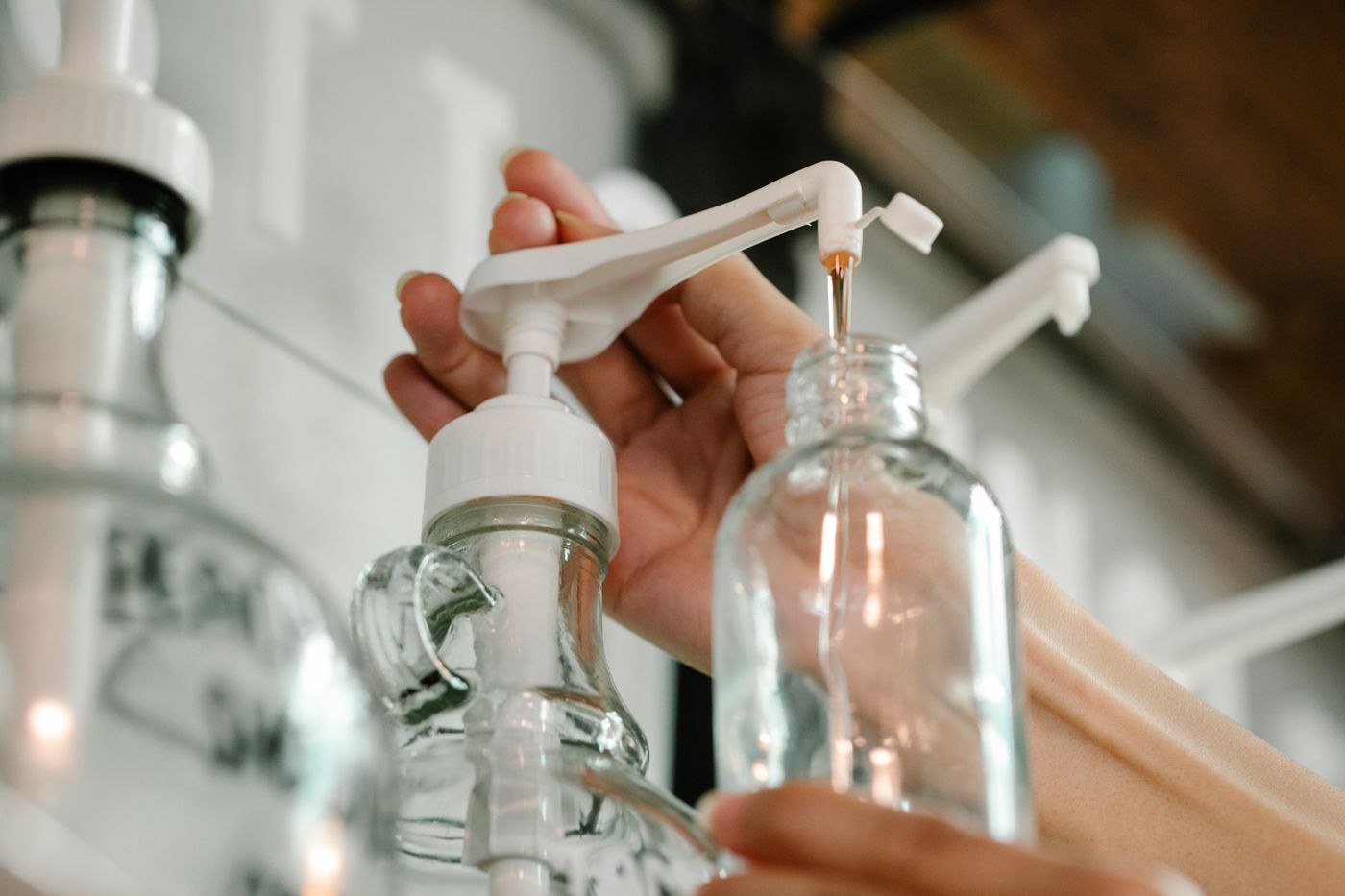
Where pouring is the intended method, choose a clean, stable surface away from splashing water and food preparation. Wash and dry your hands and use only the parts specified. Keep the refill spout from touching a dirty rim or an old applicator.
If cleaning is required, follow the specified method and drying requirements. Do not refill over pooled rinse water. Do not add alcohol, essential oils or another ingredient in an attempt to preserve or sanitise the new contents. Those changes can alter the formula rather than make the system safer.
Avoid mixing old and new product unless the manufacturer explicitly describes that approach. The presence of a preservative is not permission to ignore handling instructions or keep topping up indefinitely.
Distinguish cartridge replacement from pouring
A sealed replacement cartridge may allow the outer case to be reused without transferring cosmetic between open containers. In that design, the relevant task may be fitting the cartridge correctly and keeping the dispenser components as instructed. Do not open or refill the cartridge itself unless the system explicitly permits it.
A pour-in refill exposes different surfaces during handling. Here, instructions for the receiving container and remaining product become especially important. Comparing the two systems only by the weight of their outer packaging misses this operational difference.
Before paying for an expensive reusable case, ask what happens when the pump wears out, whether replacement parts are sold and whether the brand supports the same refill over time. A system should be judged across several ordinary refills, not just the attractive first purchase.
A refill record for shared use
Put the refill date and batch information where all users can find it. If one person routinely refills the dispenser, write down the manufacturer’s method rather than leaving the process dependent on their memory. When a new refill has different instructions, update the note and keep the current label. This makes the system transferable without hiding the product’s identity.
Keep the new batch identifiable
Save the refill label and record the date. The batch on an old outer container may no longer identify the contents inside it. A photograph of the refill next to the reusable pack can make that relationship easy to recover if you later need to contact the company.
Check the dispenser each time for cracks, leaks or parts that cannot be cleaned as intended. Reusable does not mean permanent. Replace a component when the manufacturer’s guidance or its condition calls for it.
Buy a refill quantity you can store and use sensibly. If several people use the product, agree who refills it and where the instructions are kept. A refill system works better as a simple repeatable routine than as an occasional large transfer with forgotten labels.